Editorials
Photographer: Tommi Viitala
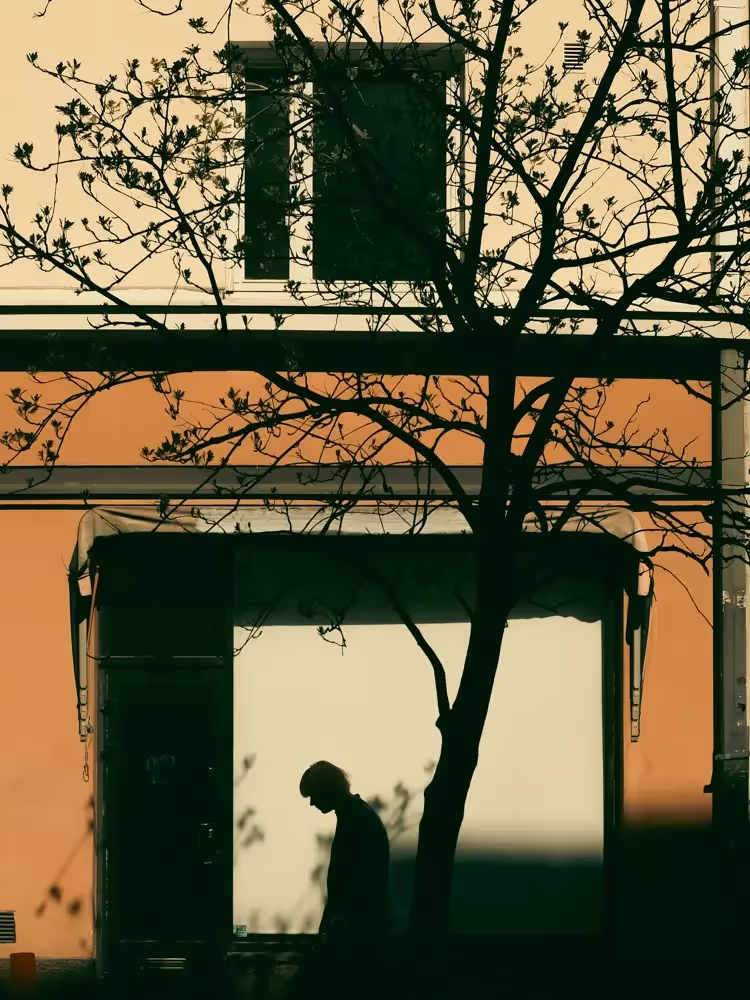
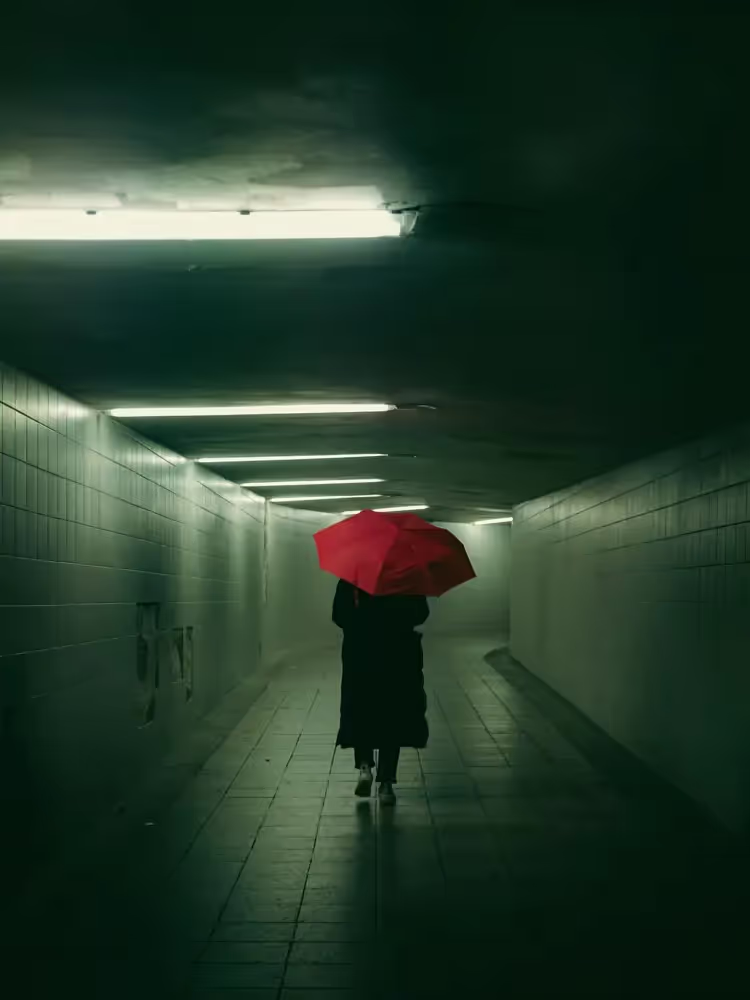
A senior producer with more than 20 years working in creative fields, street photography is a newer venture for Tommi Viitali. He started a little over four years ago, and in that time, has rapidly established himself as a figure with a signature style, featuring precise composition and sharp contrasts.
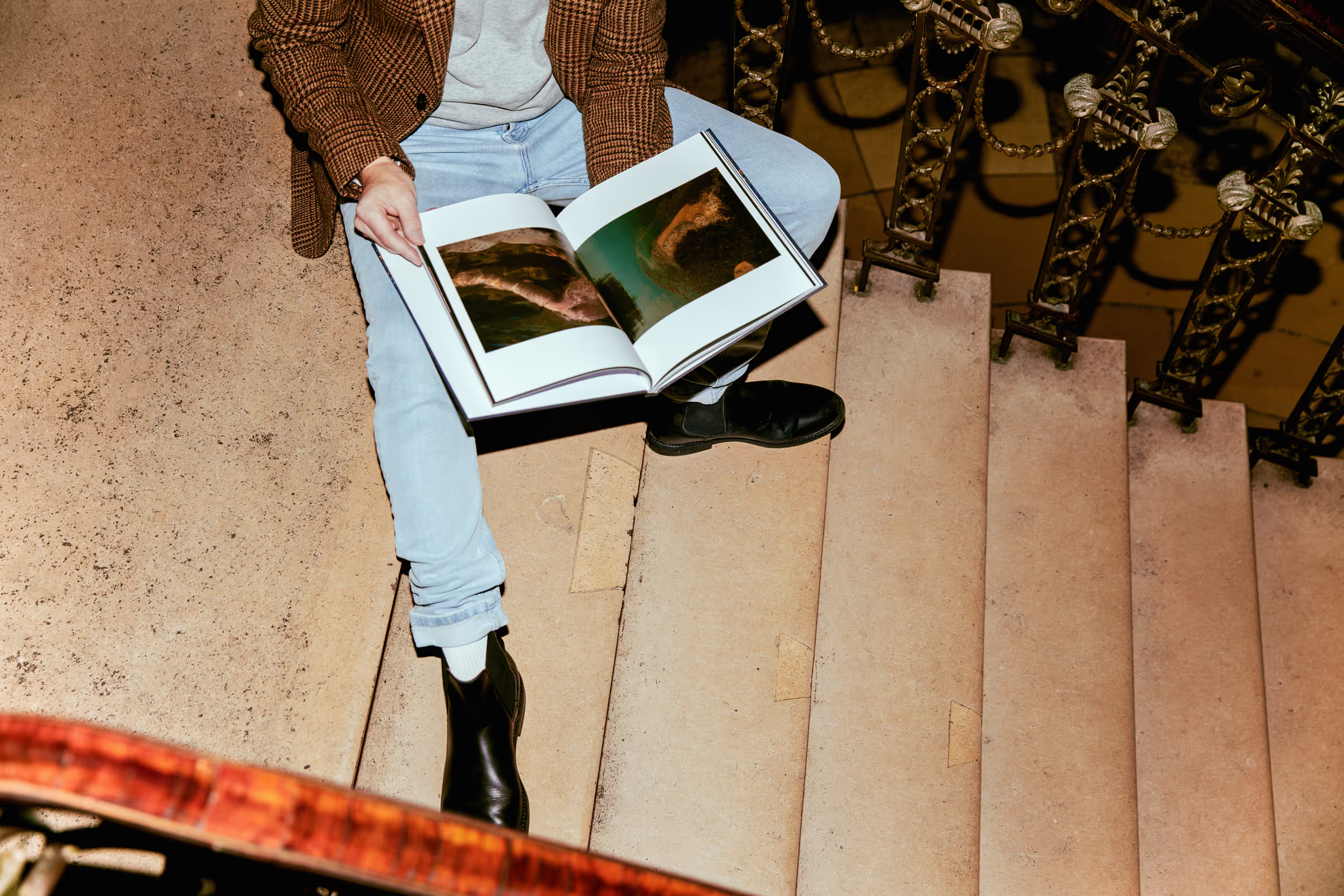
It’s entirely different to his commercial portrait work, which appear to be carefully posed shots. Yet the two inform each other, in a dialogue back and forth. Viitala typically starts a portrait session by taking a few shots in preselected locations, and they go on to other familiar environments. But he likes to end by going elsewhere, to somewhere “that's a bit unexpected,” he says.
“Usually the pictures that (go on to be) selected are from the very first and the very last ones (taken),” he explains. “It’s so backward.”
It seems that by taking his subjects out of the posed environment and confines of the “studio” set up, Viitala is recreating a little of the candidness of his street photography. But it’s not only that: the contrast he deliberately manufactures for his subjects — the familiar against the unexpected — has many of the hallmarks of his street images.
Indeed, if there is one word that sums up his body of work, it would be that: contrast. We can understand that in a purely technical way — light contrasting with shadow is a recurring theme in his images — but there is a strong emotional component as well. As a Finn, Viitali is deeply connected to the seasonal difference. “In the summertime, the sun doesn't go down at all…this nightless night. And then in winter time, we have so much darkness.” He speculates that emotional contrast is partially borne out of literal light and shadow.
“This is a land of contrast,” he says. “And it’s funny that (Finland) has so many times been selected the happiest country in the world.”
More recently, Viitali has been shooting in Paris, Rome, and Madrid, where the light, and the people are completely different. His work is very popular in Southern Europe, and he suspects it may be because his signature style contrasts so strongly with their natural aesthetic and way of life. “It is our personality, the Finnish mentality. That we love our peace… Even if it's like a sunny day, I like to find a place where (the light) is minimal.
“This Finnish melancholy is something different, maybe exotic (for them)?” he wonders. There is a lot of isolation in Viitali’s images as well. Even when his people are in crowds, they are also alone, isolated individuals who just happen to be sharing a public space with others. It’s another contrast with the stereotype of the Mediterranean peoples, who of course are known for their noisy celebrations, fiestas and joie de vivre.
“But I try to combine these two styles,” he says “I try to have this lightness that they are having, but also… this emotion that I take from Finland. Having this high contrast on the outside.”
As mentioned, contrast is an idea that permeates through everything he does. Having just spoken at length about Finnish solitude, he immediately goes on to talk about a new collective in the country — a complete contrast! — where street photographers go out together.
“We socialize and take pictures, exchange interests… ‘Are you going on the streets today or tomorrow? Let's go in a crowd!’” An interesting counterpoint to the stereotype of the Finnish person, alone even when in a crowd.
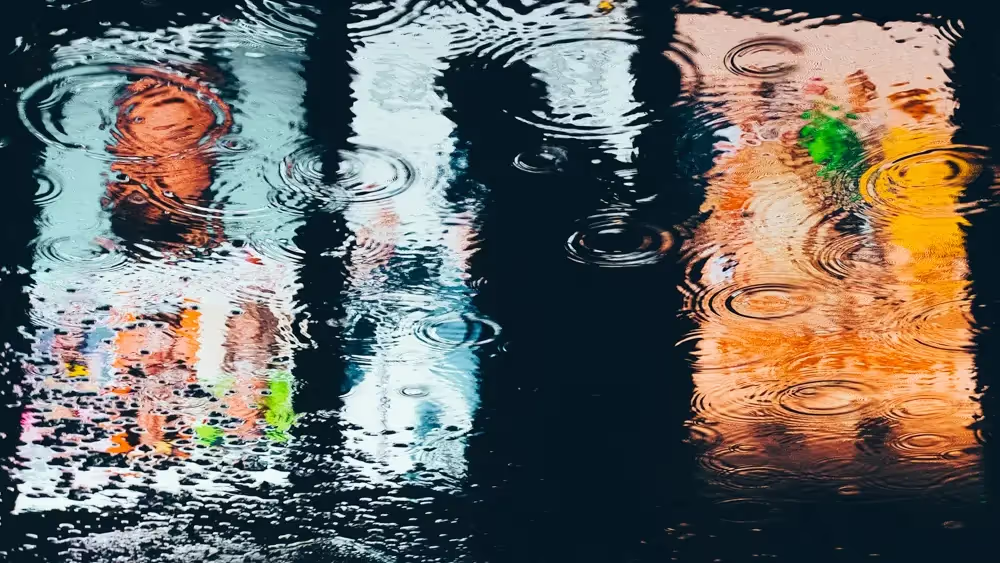
These collective walks are not only for established photographers like Viitali and his contemporaries, but also about raising fresh young talent. But he learns as much from them as they do from him. “They (young people) can do something totally new, in a new way. Like multiple exposures, or taking a shot upside down or something.” Sometimes, “not knowing the rules,” he says, can lead to increased creativity. “Real artistic stuff. Painting with photography. Feeling photography. I think that's fantastic.”
Born in the seventies, Viitali started his career before the advent of digital photography. Recently, he decided to go back to shoot on film for a whole month, to see how it affected his work. Again, it’s contrast in action — this time a forced contrast in his own creative process. Human beings in general do not tend to like change or uncertainty, but Viitali is continually pushing himself towards new challenges.
One thing he remembered is how film forces a distance between creating and viewing which he has found newly intriguing. “I have to wait with film, to develop, (and then) I get a happy surprise — hey, this is nice!”.
The limitation on the number of shots you can take has also forced him to be more selective and “to see the image already in my mind”. Although he returned to digital after a month, he has tried to keep the “film mindset”; taking fewer shots, being more discriminating, and trying not to look at his images for a few days. He’s not talking down anyone who takes a more scattergun approach, but he personally finds it especially pleasing to achieve a bull’s eye with just one or two shots taken.
“I see a really nice light and I have this image in my head that, okay, now if there comes a right kind of person… just a little bit of a wait and then just click it. Yeah.
“When it hits,” he says, “it's totally great. Then I know that that's perfect.”