Editorials
Photographer: Luc Kordas
Over the course of his career, Luc Kordas has established himself as a street photographer and documentarian, leaving his native Poland in early adulthood for America.

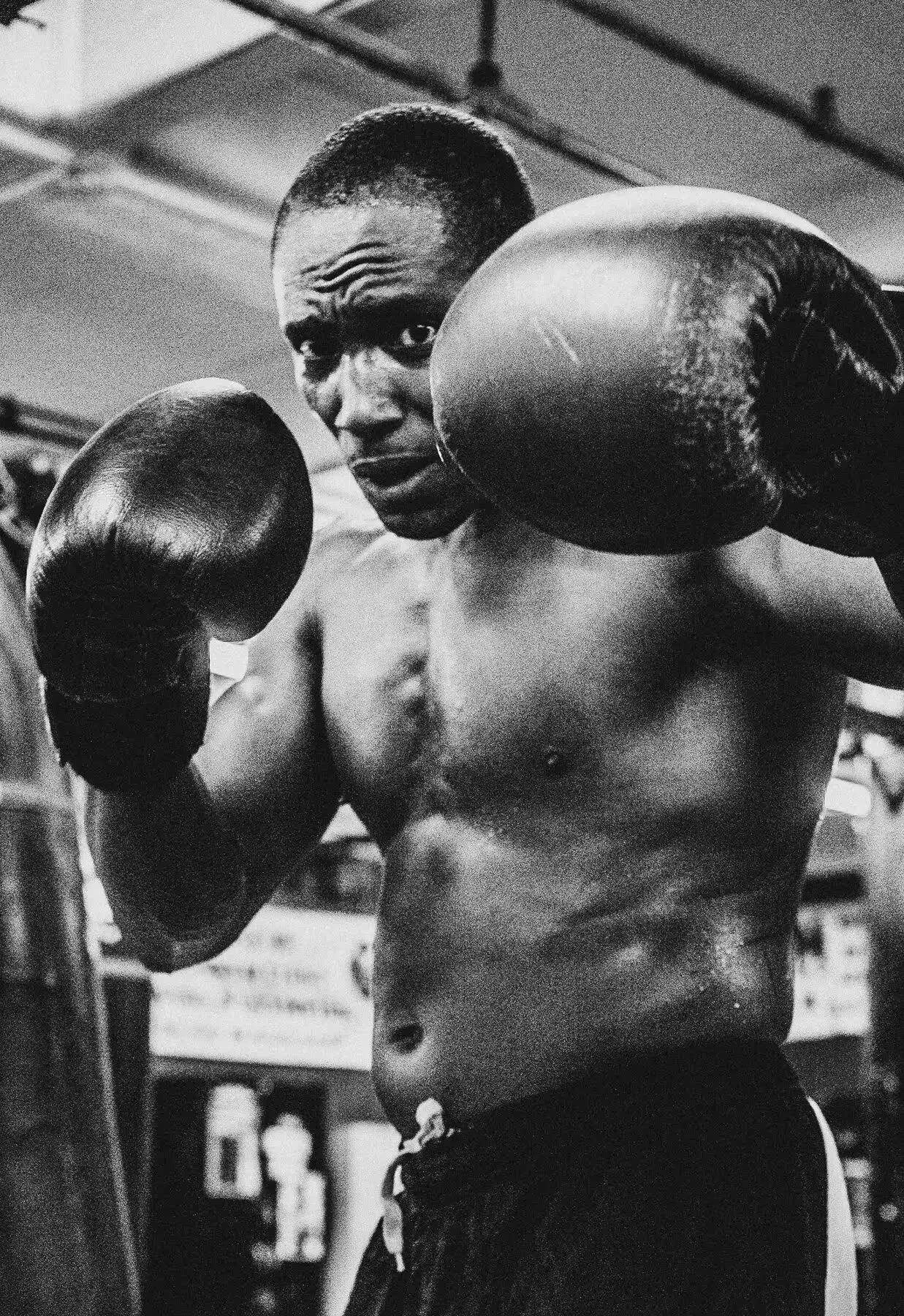
New York City is of course an iconic destination for contemporary, candid street photography and that’s where Kordas honed his art and style, in his work titled “The New York Chronicles”. It’s an image from this series that appears in SHARE, depicting an amateur boxer at Gleason’s gym.
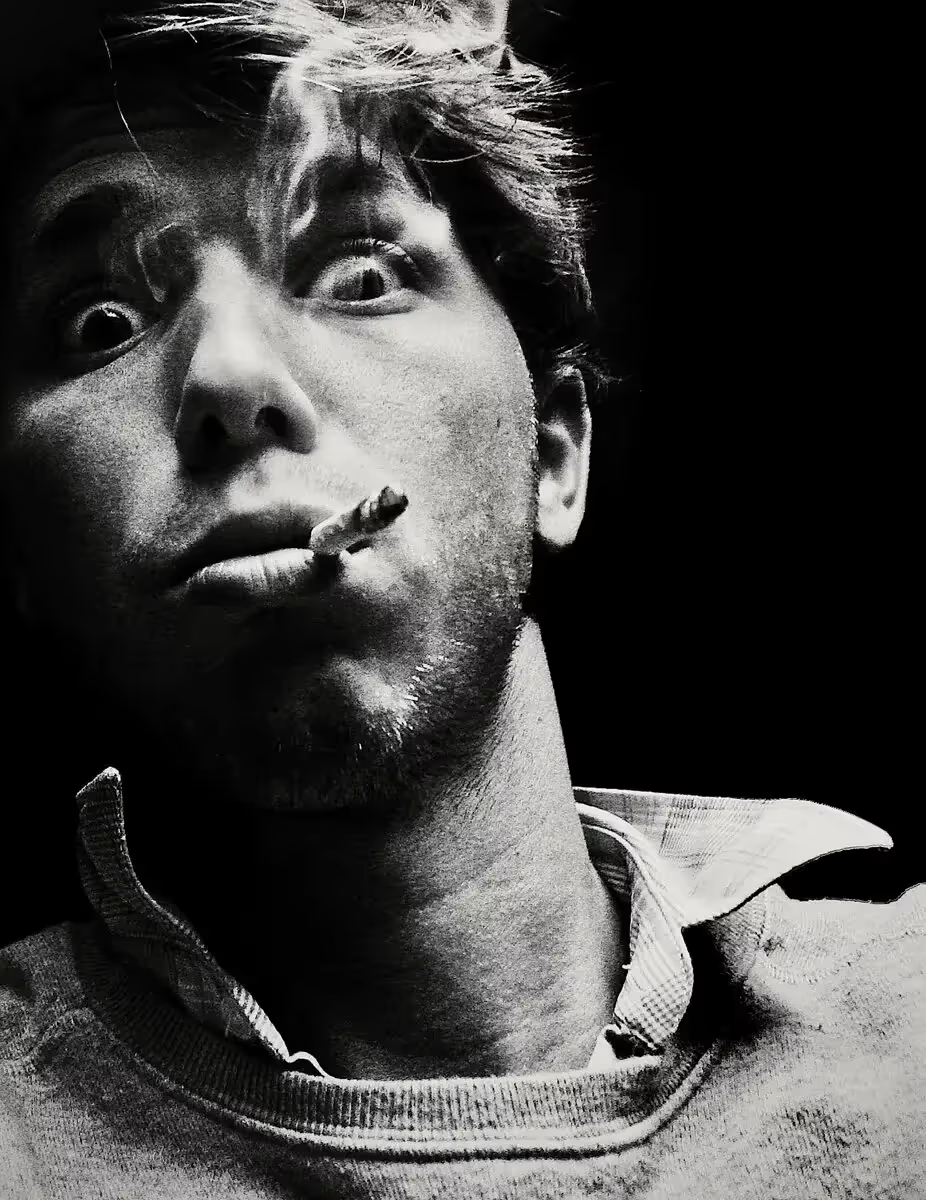
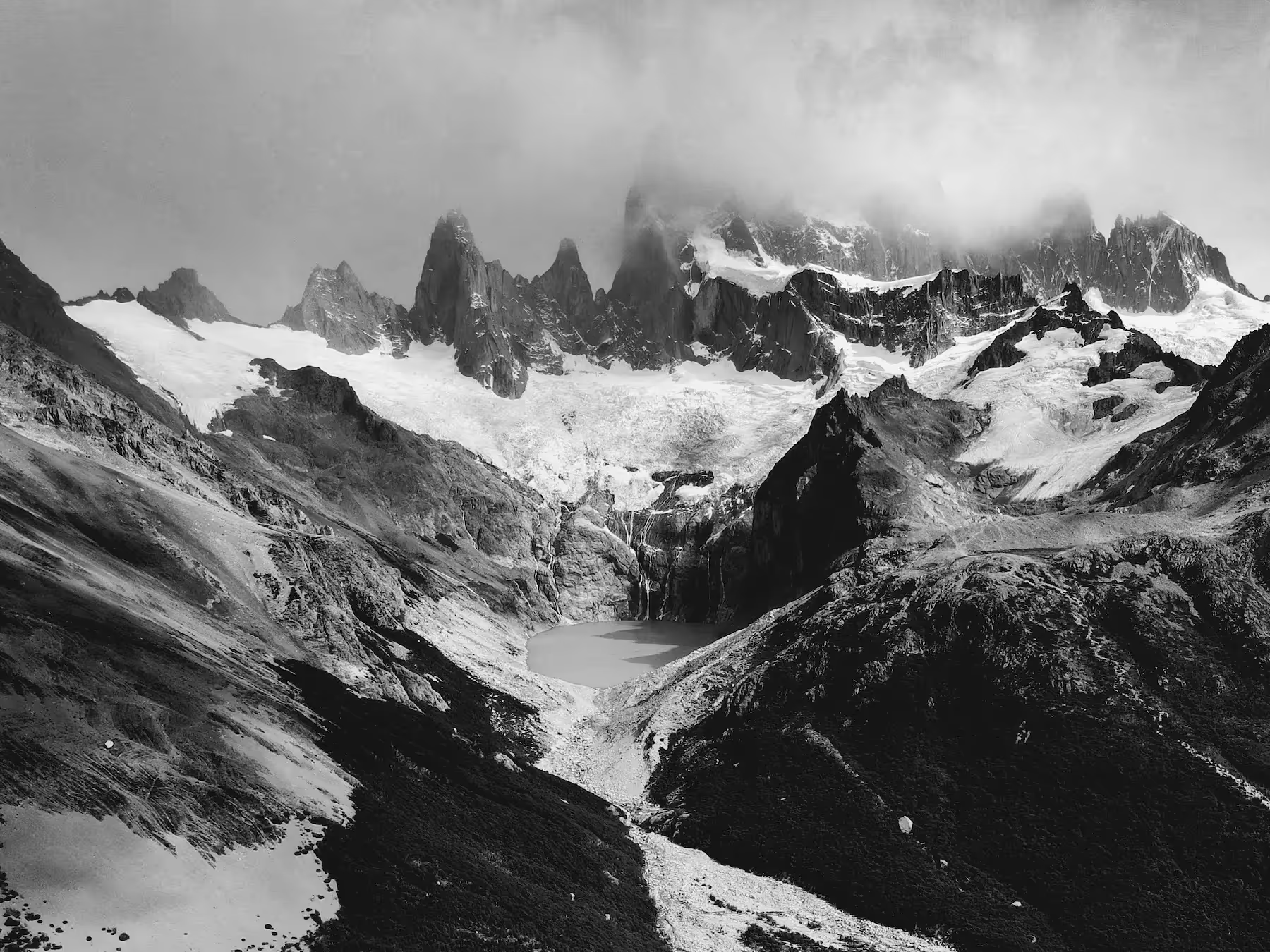
Although he shoots in colour as well, his documentary work is most often in black-and-white, yielding, as he says, an “instant timelessness” to the images. His photography has the immediacy of truth, with subjects often captured mid-movement, or glancing up at the camera with a sudden and unsettling awareness of their position in a public space.
Perhaps it is this that made Kordas an obvious choice for the Polish Ministry of Culture when they were seeking a photographer for the project “Polacy” (literal translation: Polish people): an exploration of contemporary Polish identity in a series of unstaged photographs across Poland’s evolving social landscape. It’s intended as a conscious echo of Robert Frank’s famous work from the 1950s, “The Americans”, criticised at the time for its stark depiction of class and racial divides in contrast to the glossiness of American wealth.
Kordas is currently in Poland, travelling around the country and shooting this body of work. In contrast to the wide-angled lens and multiple subjects favoured by many contemporary street photographers, he’s “more of a person who likes to just single out subjects in the frame”.
The vast majority of the photographs in this work will be candid portraits, he says. Yet the role of a documentarian can be hard to navigate. He anticipates questions: “Why didn't he photograph her? Or this part (of the country)? Or why can’t we see these kinds of people?”
We like to think of documentary photographers as entirely passive, a mere lens through which truth is captured, but of course that’s not actually realistic. At the very least, the photographer will always choose who they point their camera at, and which images are selected to go forward for the body of work.
“Yeah, I'm not trying to be objective,” agrees Kordas. “It's impossible. I'm trying to be as broad as possible, but it all still filters through me and my experiences, informed by twenty years of living abroad and so on.”
It is a strange landscape to navigate; yet one that any immigrant will recognise. “I was definitely an outsider in New York,” he says, “but I felt more free over there, because no one really paid attention.”
And when you return to your country of birth, you have this feeling of being an insider again – yet in another way you’re seeing it through the eyes of a foreigner, influenced by your time overseas. He reports that his Polish subjects ask him: “‘Why would you photograph that? That's so mundane.’
“But it isn't (mundane) for me, because I haven't lived here for twenty years.”
Does he find there to be a difference between shooting Americans and Poles? Of course, there are practical differences – privacy laws are very different in the two countries, and, he points out, “doing street photography over there (in New York) – people are thoroughly used to it.” There is more need for conversation with his Polish subjects, to explain what he is doing, and why.
But beyond that, Kordas also finds he has a more sympathetic eye for his fellow Poles.
“Here in Poland, yes, I feel more sympathetic, because I understand these people. I know where they come from, and they are also people from all different walks of life, from Warsaw celebrities to the poverty of (former) coal mining districts.”
That’s not to say that The New York Chronicles are judgemental, however. Kordas has a kind eye for his subjects, and the warmth he feels comes across in all his shots. His people are not usually beautiful, but they are immensely human, with all the complexity and empathy that entails.
And for a documentarian, there is little greater praise than to say that he captures humanity, in its messiness and multiplicity.