Editorials
Photographer: Iosonopipo (Giuseppe Palmisano)
Not so much a photographer review as a project review, the collection of work under the name iosonopipo is a group of photographs brought together under the umbrella of Giuseppe Palmisano. He is commonly identified as the artist behind the work and it is true that they would not exist without him.
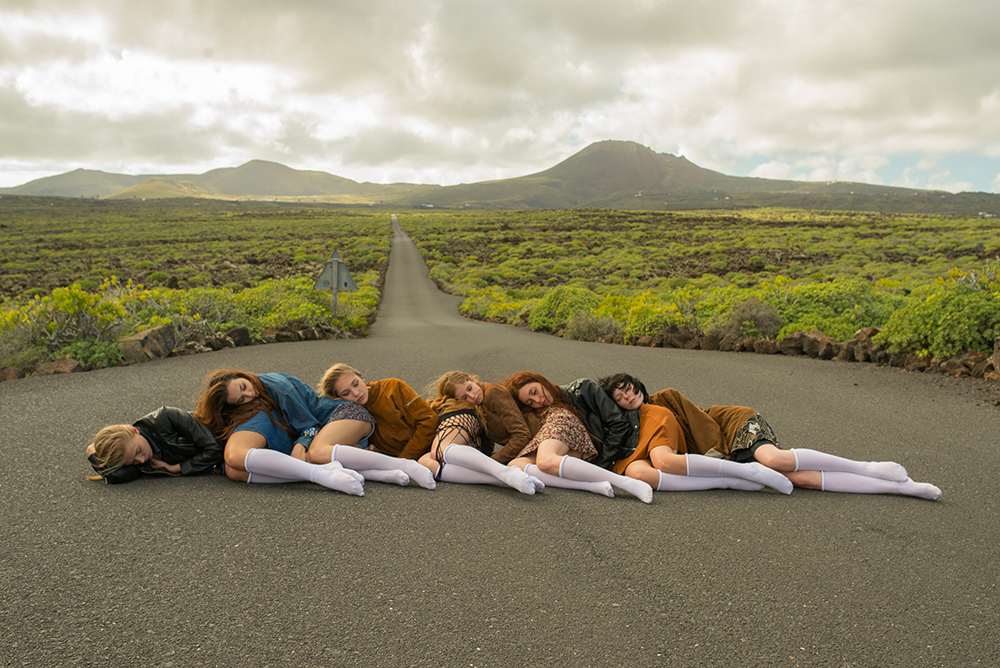
Not so much a photographer review as a project review, the collection of work under the name iosonopipo is a group of photographs brought together under the umbrella of Giuseppe Palmisano. He is commonly identified as the artist behind the work and it is true that they would not exist without him.
“It is strange,” he says, “because it's at the same time, an identity, and…a (collective) project.”
The name, in fact, was sold several years ago and he retains “ownership” of the project only as the creative director, returning several years later to lead it in new directions. It is something that has taken on a life of its own, yet will not let him go.
“I was thinking about identity and reality,” he says, “who is the real artist, and how to look at pictures.” Palmisano is at pains to stress that these pieces do not belong — have never belonged — solely to him. To claim the identity of the artist is something that he finds troubling, when he feels that credit and ownership of art are a collective endeavor.
Polyglots will recognize this tension in the very name of the project: iosonopipo, io sono being the Italian for “I am” and pipo being, of course, internet slang for people, in the plural.
Iosonoipo. I am people.
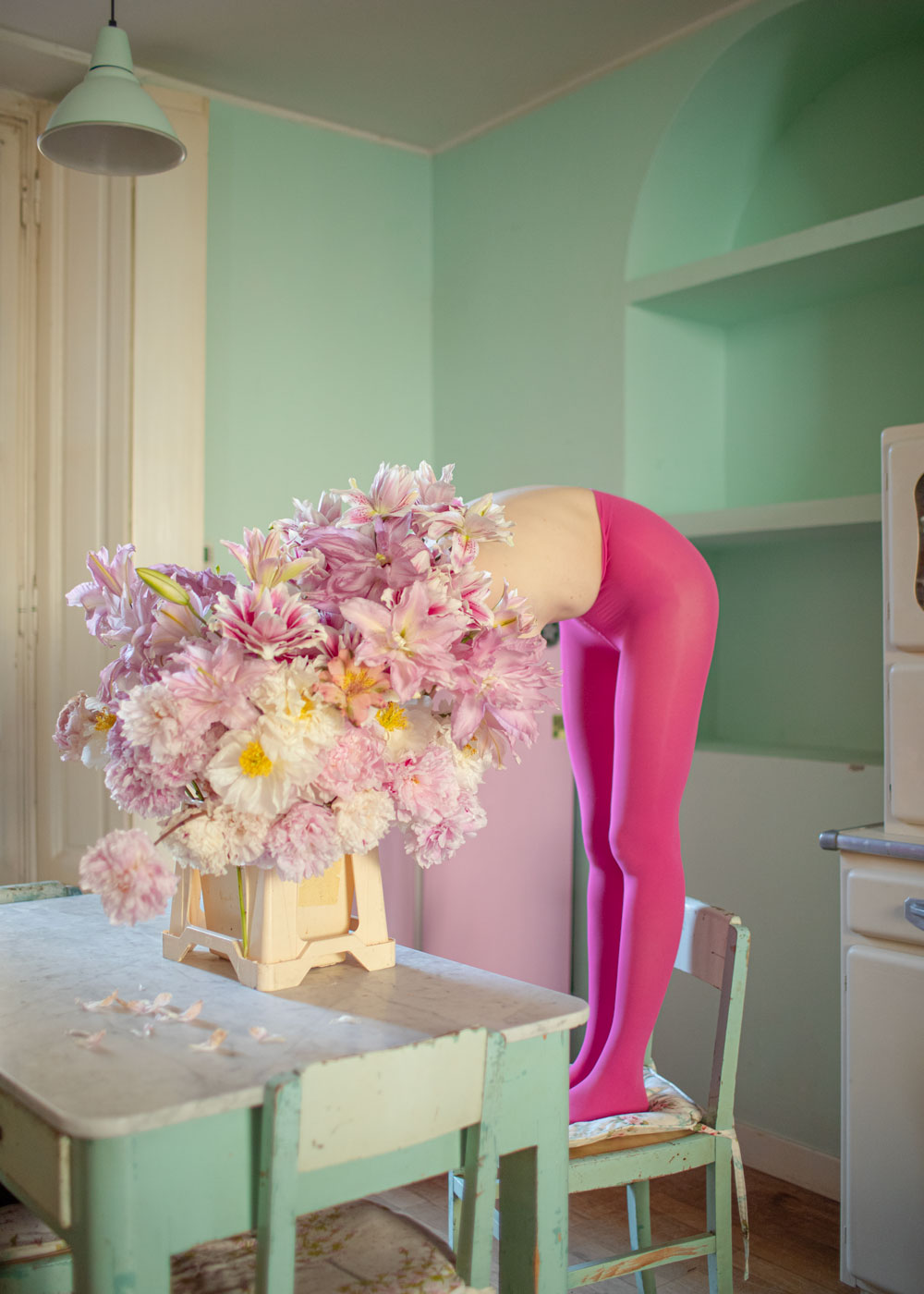
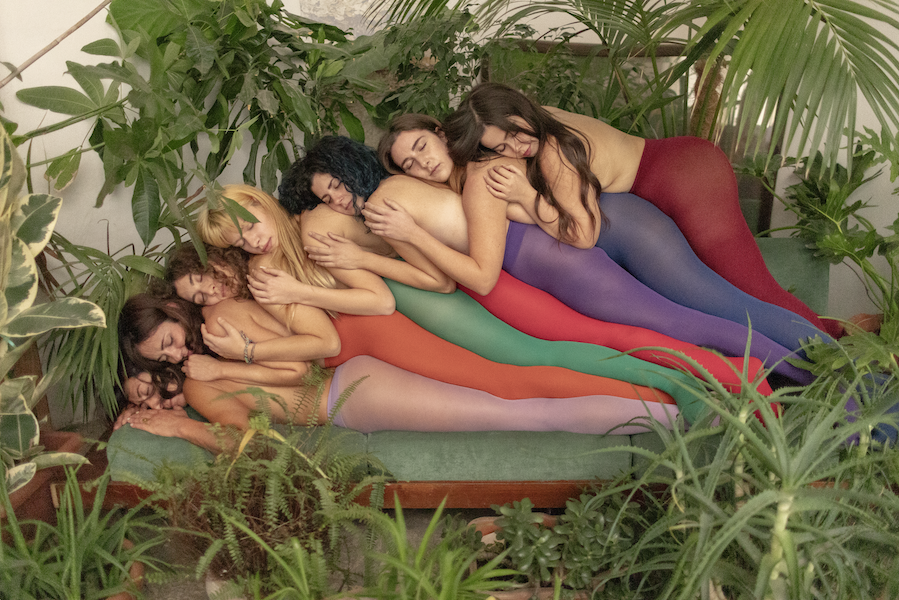
Yet the “people” reference is a happy accident: Pipo is also the name of a famous clown character, and a way to express absurdity or nonsense in multiple languages. Palmisano’s background is in theater and especially in clowning, and the theatrical origins of the work are clear. The costume element with the brightly colored hosiery worn by most of the subjects, and the innate absurdism of the poses and settings are distinctly playful.
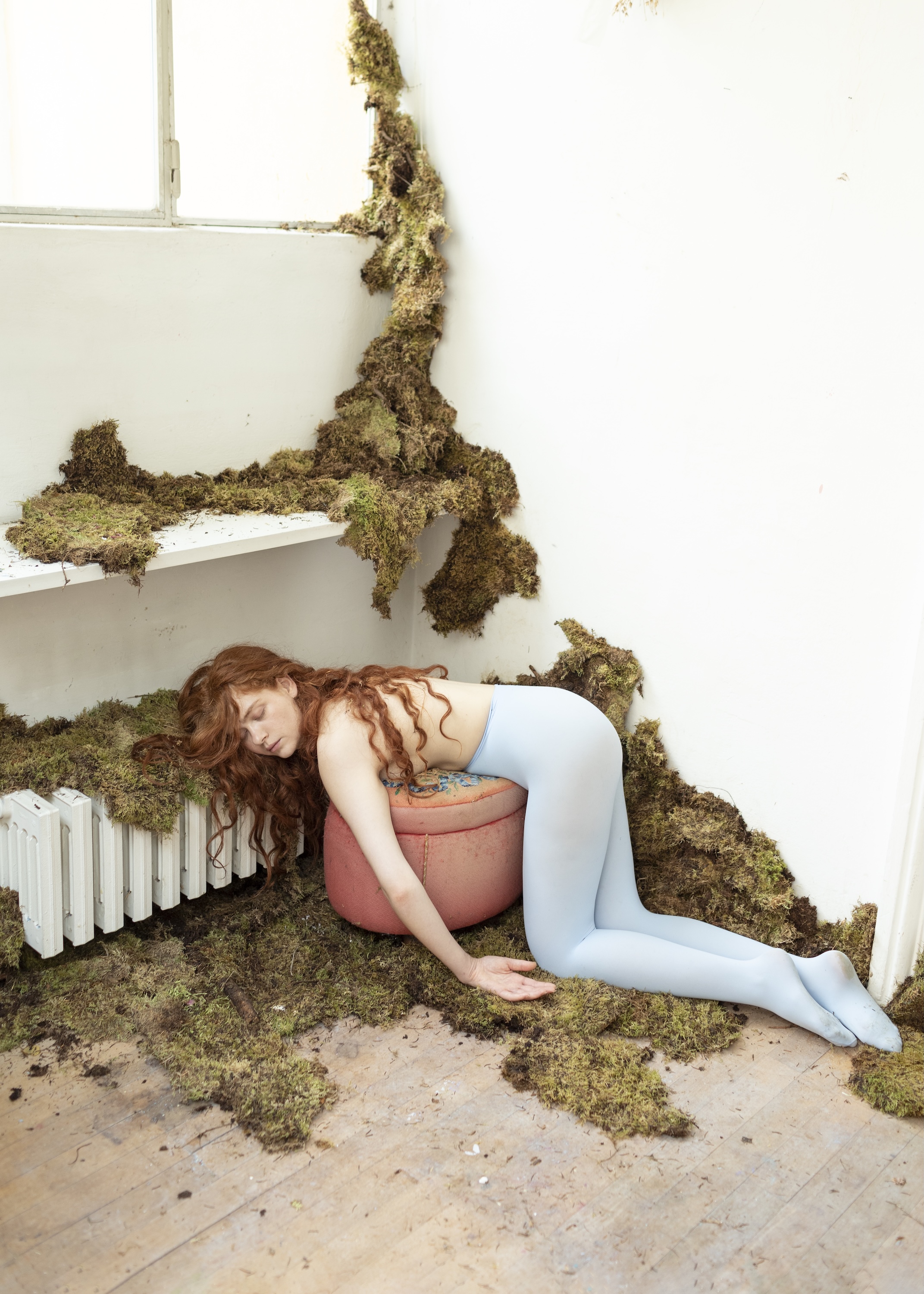
Synchronised swimmers stick their stockinged legs up from a sea of greenery; a woman distinctly reminiscent of a mermaid with trailing locks is draped over a radiator below a window. Many of his images have a domestic setting, with half-naked bodies incongruously juxtaposed with lampshades, sofas, or other household items.
“I always want to joke, to play, and to make something lighter,” he says. The hosiery, in particular, was for him a way to take the sexual weight of nudity away from the images; a way to shine a spotlight on the absurdity of the assumption that a naked body must represent something erotic.
“I didn’t want to make erotic images,” he clarifies. “It’s subjective. I don’t want to see the female body as (only) an object of eroticism and sexuality.”
It’s a fascinating insight, and especially so considering that it comes from a man. At the moment of creation — or “making” as Palmisano prefers to call it — he is the viewer and the one who is gazing. Yet he is deliberately decentering the erotic male gaze in the work. Of course, this is all part of the collectivism of the project.
“I want (the individual) to disappear,” he says, and you can see that in the work: multiple images contain the subjects burying their heads or hiding their faces. But he includes himself in that disappearance.
“It's not yours and it's not mine. We make something happen. My job is finished (once) I have made things happen.”
We talk briefly about an Italian word scoria, which we have to look up to find the English translation: the residue.
“You filter something that passed through you and you make another shape of that thing,” Palmisano says. The role of the artist is for him an essentially passive one, much as Michelangelo described his process as “freeing the statue from the marble”.
“The project has an independent life. (It is) independent all the time,” he says. He compares it to having a cat. As all cat owners know, cats do not really “belong” to anyone. It may be your name on the paperwork, but the animal is an inherently independent creature. So, too, are artworks.
“They have a life of their own. It is one of the biggest questions of my career — what happens once you lift the work of art from the wall? What remains? It is the effect that it has had on people: movement, life, and change.”
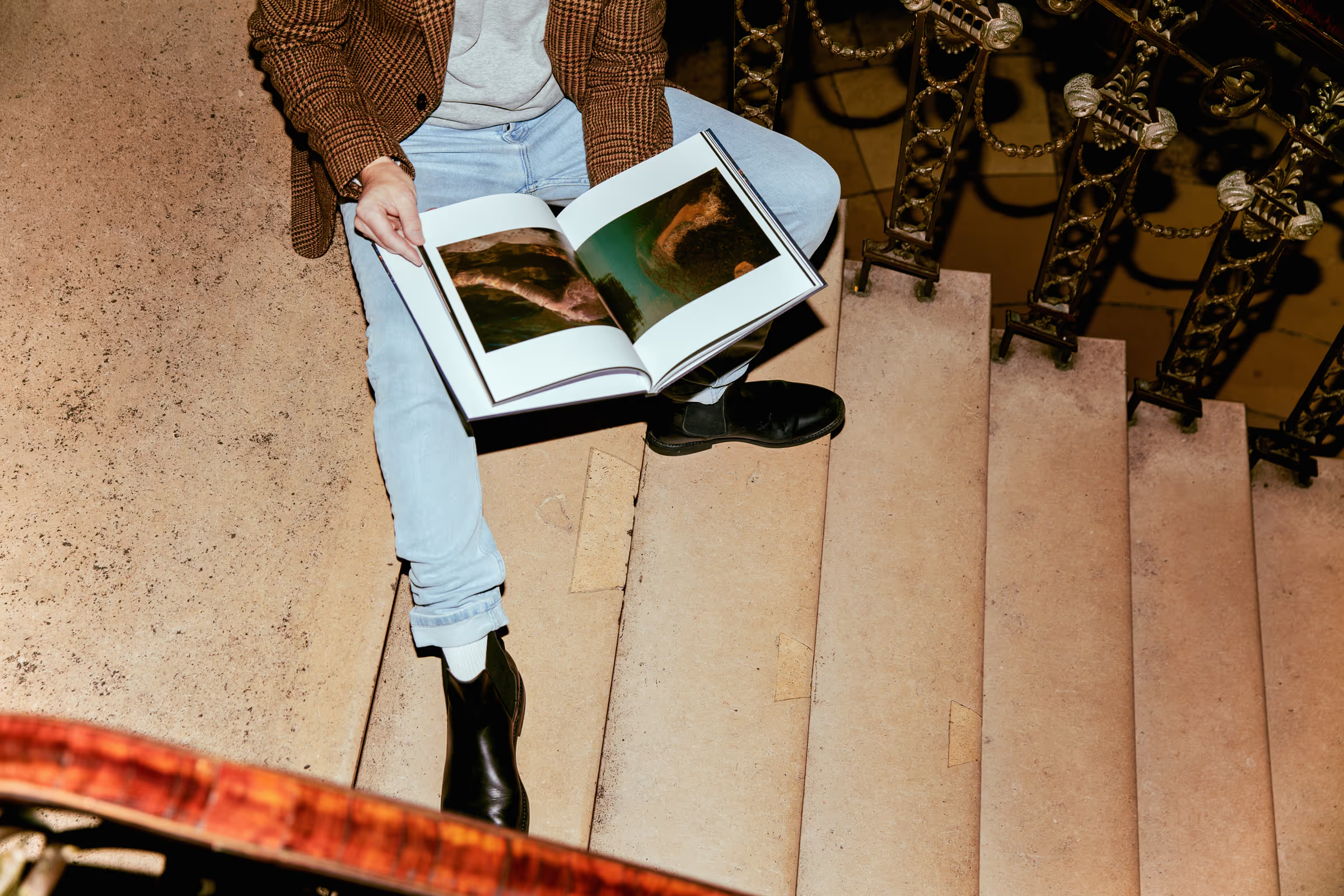
The exhibition — or the book — is only a single point in time in the life of a work. Now it is up to you, as much as it is up to anyone, to decide how it progresses.