Editorials
Photographer: Inge Schuster
Over the course of her eclectic career, Inge Schuster has worked in a great many locations and turned her hand to many different creative media. Her disciplines include fashion design, landscaping, architecture, photography, and most recently AI.
Over the course of her eclectic career, Inge Schuster has worked in a great many locations and turned her hand to many different creative media. Her disciplines include fashion design, landscaping, architecture, photography, and most recently AI.
But for Schuster, these are not disparate activities, but interconnected ones. “From the world of fashion and textiles, I gained a strong sense of materiality, detail, and surface,” she explains. “Landscaping and architecture taught me to think in terms of space, proportion, and flow – how we move through a work, almost like moving through a building or a garden. Photography sharpened my eye for light and composition.”
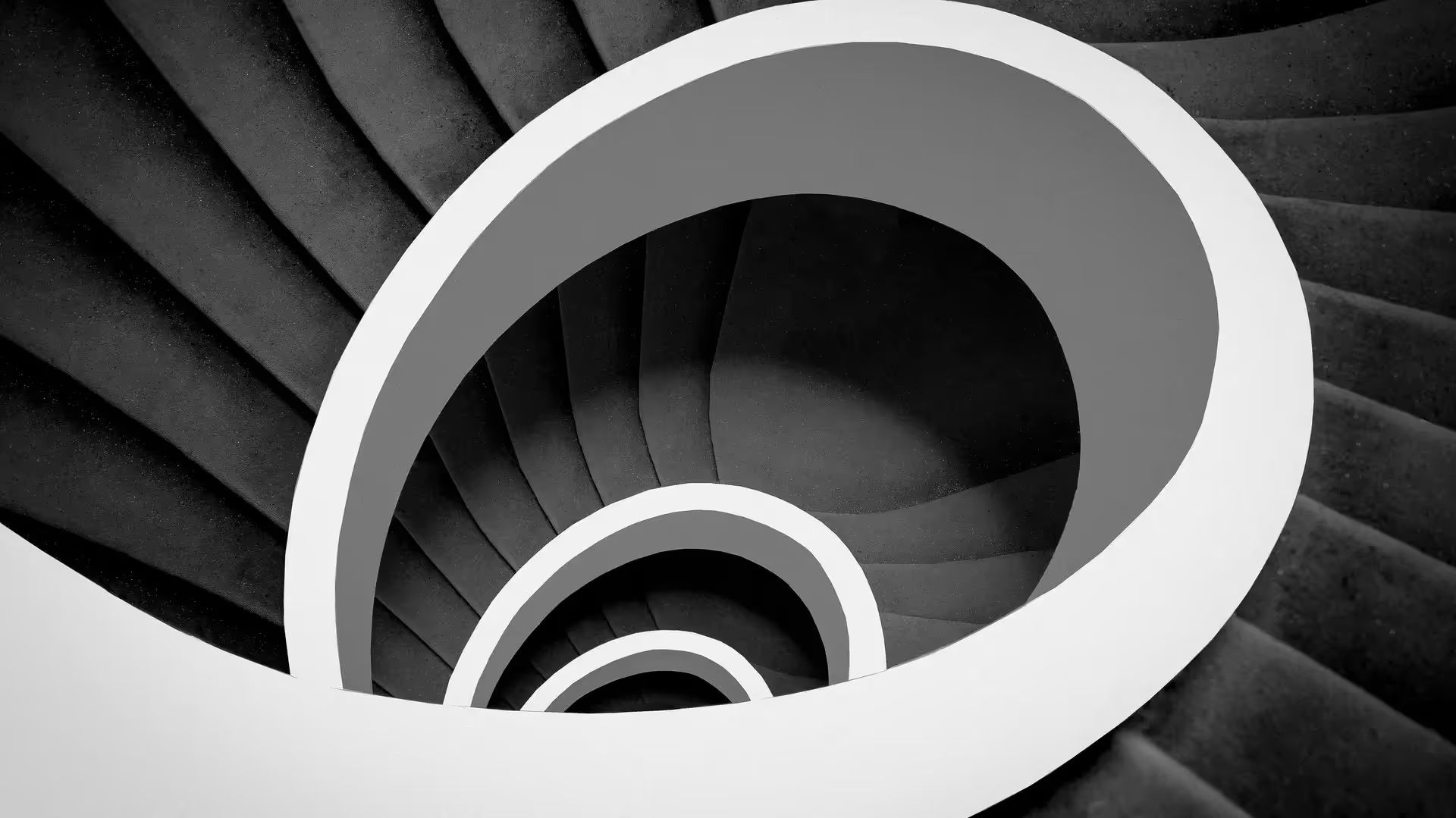
On careful examination of any of her work, it is possible to trace these lessons learned through a lifetime of creative study. Her piece for SHARE, “Black & White” is a case in point. In October 2015, Schuster visited the Deichtorhalle, Hamburg, during an exhibition of Günther Förg’s work. It proved to be a moment of creative epiphany for her, in which architecture and photography came together in a flash of inspiration.
“I (had never taken) photos of modern architecture but really wanted to try,” she says. “In the Deichtorhallen Hamburg there was…exactly what I was looking for. Good light, big rooms and beautiful art on painted walls.”
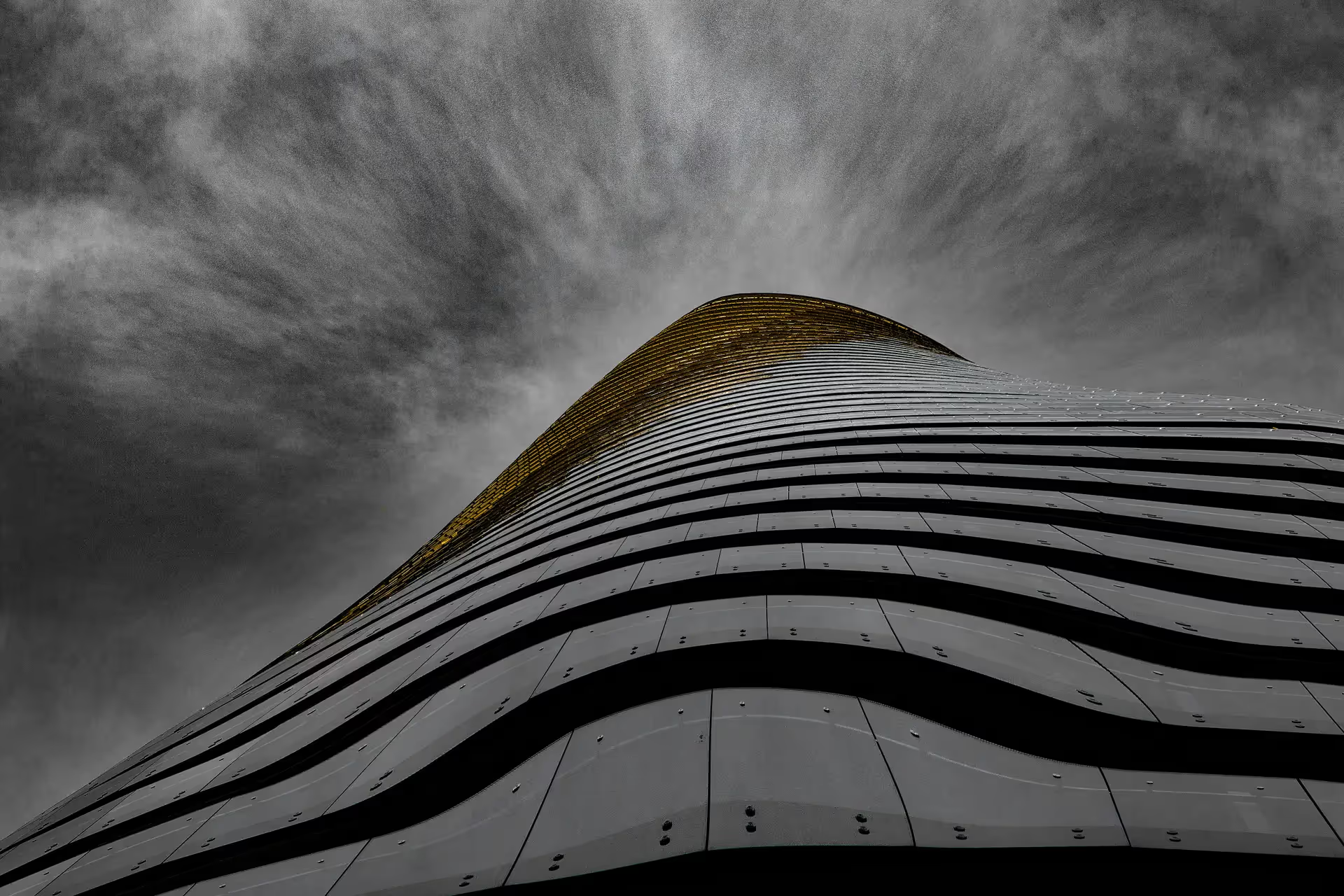
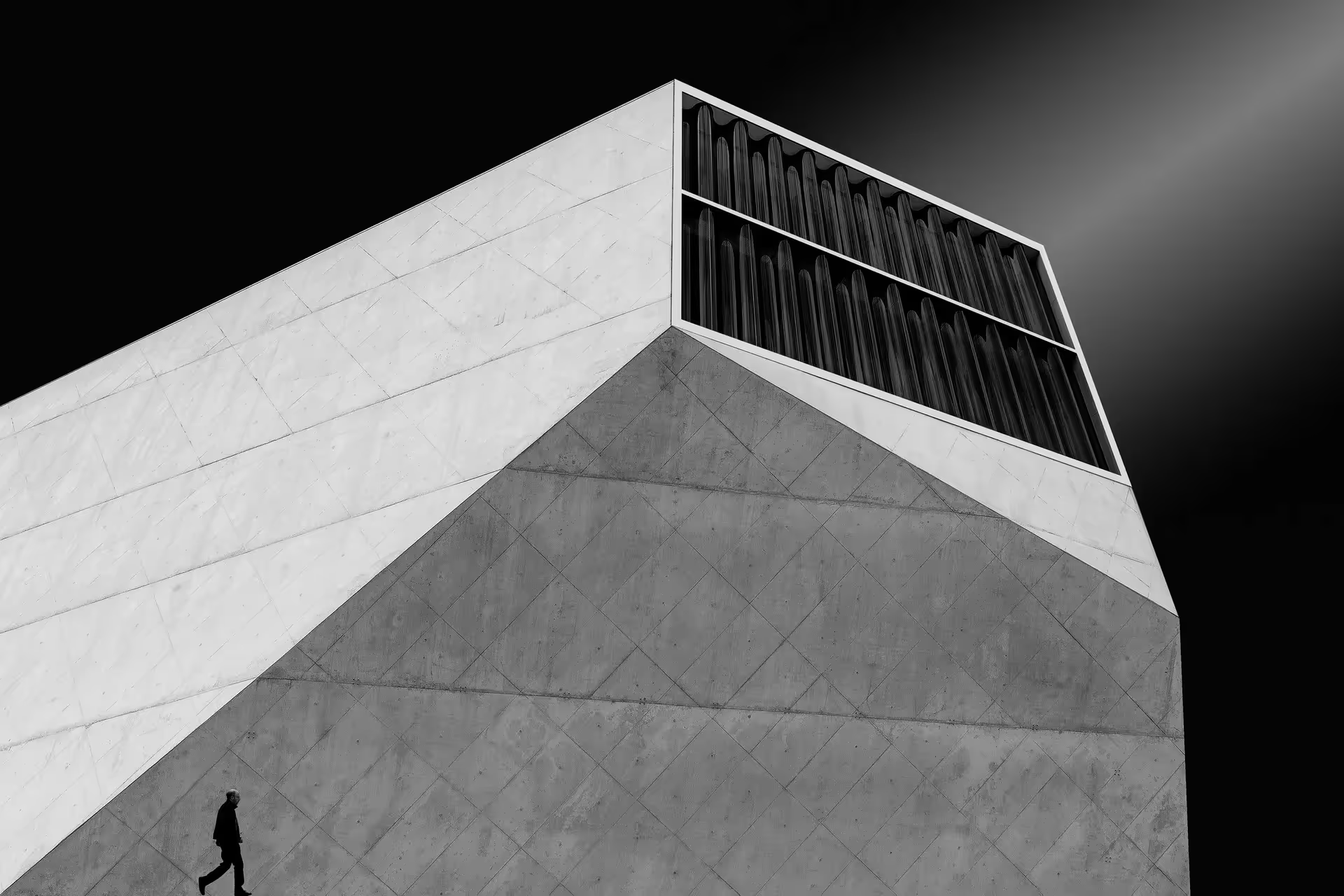
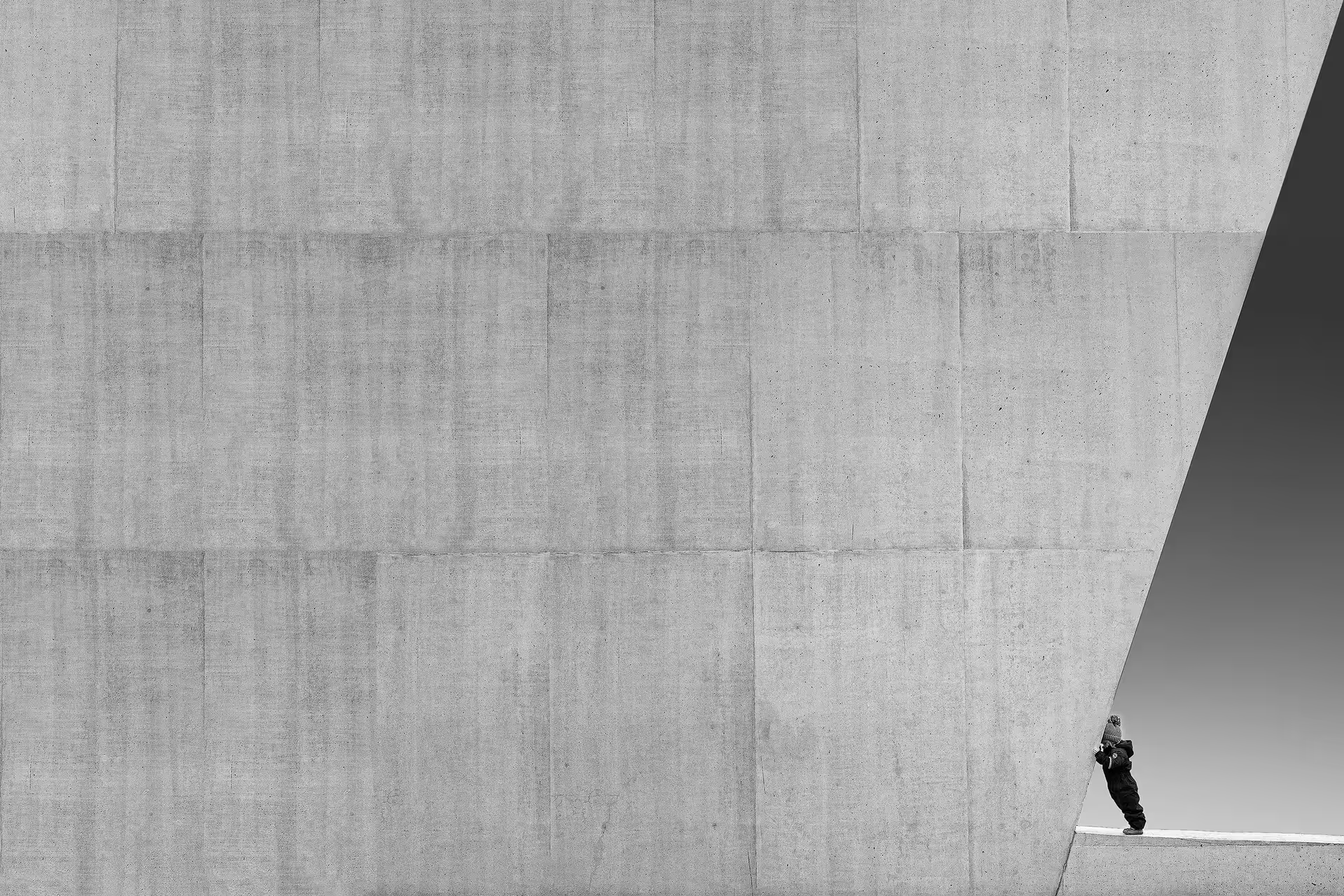
“Black & White” is a piece from that shoot, which yielded multiple successful images that have been featured in many publications. In this one — and others from that day — the lines of architecture can be seen not only in the subject matter, but in Schuster’s approach to it.
“In my images, I search for an inner order – a sense of calm in the meeting with what is strict and clear,” she clarifies. “Architecture and geometry give me a framework where I can distill reality into something simple and precise.”
Although she often shoots in color, this piece, and many others, are monochrome, which, as she says, “reduces the image to its essence. In this field, removing colour creates a special opportunity to highlight lines, rhythms, geometry, and the play of light and shadow. When I choose black and white, it is more about structure, balance, and contrast.”
There is a fascinating comparison here between this and some of Schuster’s other work, in which other elements of her extensive experience are drawn into the forefront. Her architectural shots are cool, smooth and collected, often abstract and with little color. Other photography is vibrantly colorful, featuring texture so rich it is almost possible to reach into the image to feel it.
“When I choose colour, it is usually because the mood demands it,” says Schuster. “I want to capture an atmosphere, an emotion, or a dream.” This leans in strongly to one of her stated sources of inspiration: “Human stories and inner worlds – the psychological layer.”
It’s something she’s recently been exploring more and more, as she explores her heritage and embraces a new medium — AI. In contrast to many other artists, she sees it as a partner in her work, more than a mere tool.
“It surprises me, challenges me, and sometimes forces me to take new directions. It is a form of collaboration where unpredictability becomes part of the creativity.”
The partnership has yielded some fascinating results. Schuster’s recent work is simultaneously old-fashioned and hyper-modern. You could imagine coming across the ancestors of these works in illustrations from Hans Christian Andersen, or collections of Danish folk tales; yet the brilliance and clarity of every individual component speaks to their contemporary creation.
“My heritage is both a conscious and unconscious source,” she explains. “AI has actually made it easier to bring these layers forward – to create images that feel connected to the past, yet point toward the future.”
And for those who remain unconvinced of the role of AI in artistic endeavors, Schuster has some reassuring words.
“I remain the one who chooses the path, who fine-tunes, and who decides when an image is complete,” she says. There is no doubt about who the artist is.
And what is it that she seeks, when deciding that a piece is complete?
“I always search for a balance between the simple and the poetic. Whatever the medium, it is about finding an image that holds more than what you see at first glance.”
Her work is indeed simple, but deceptively so. There is never anything more in her pieces than there needs to be. And yet, it is strange how often something new emerges from them, when you look for a second, third, or fourth time.
They are, as Schuster intends them to be, images “you can return to, again and again”.