Editorials
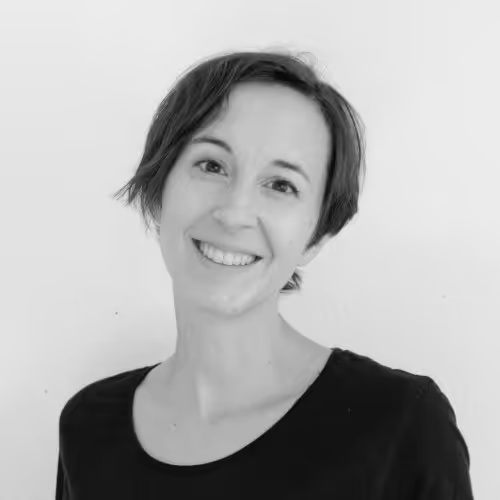
Artist Review: Mathilde Olsen
Visibility, veils, and exposure in portraiture: turning your back and gaining enlightenment
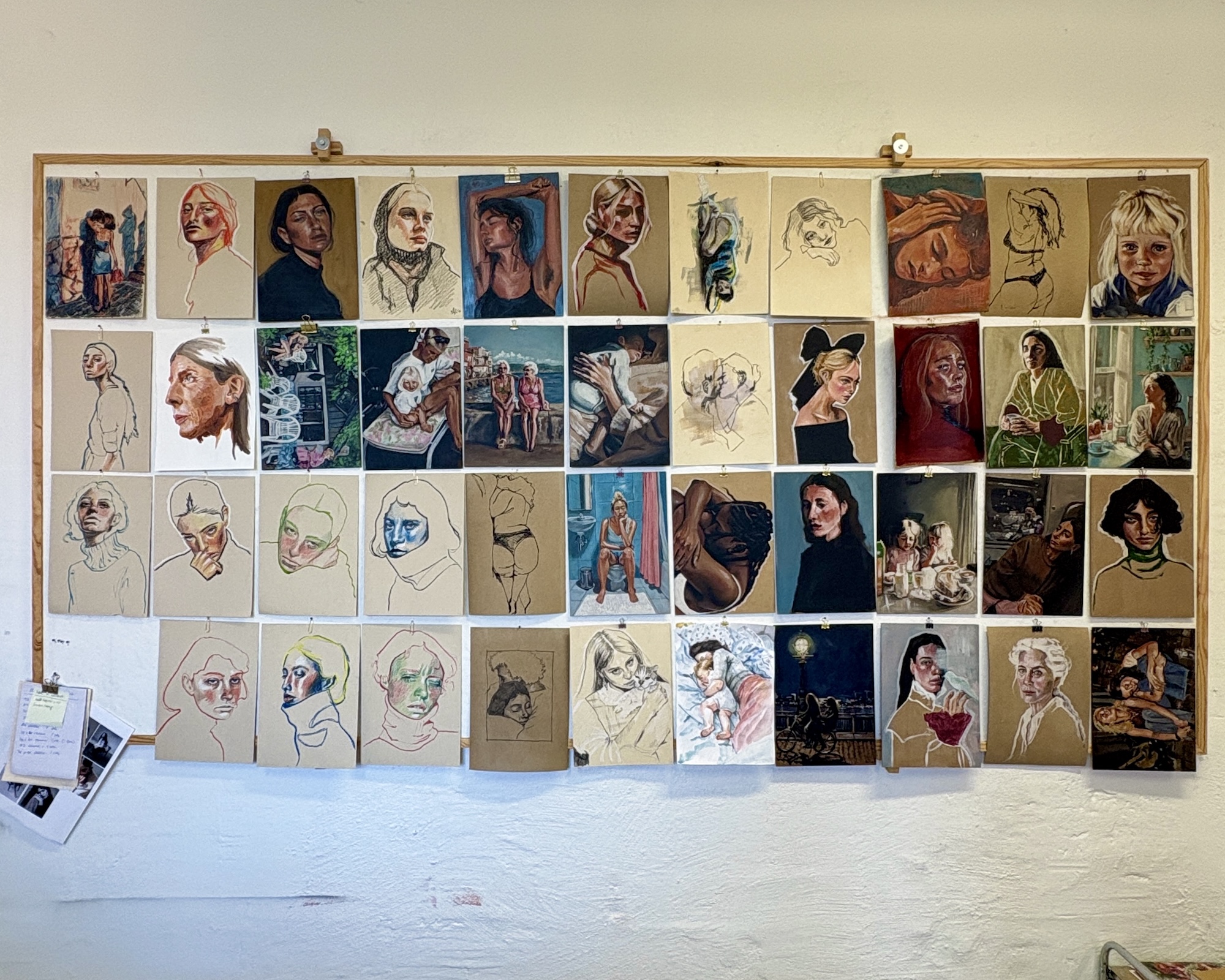
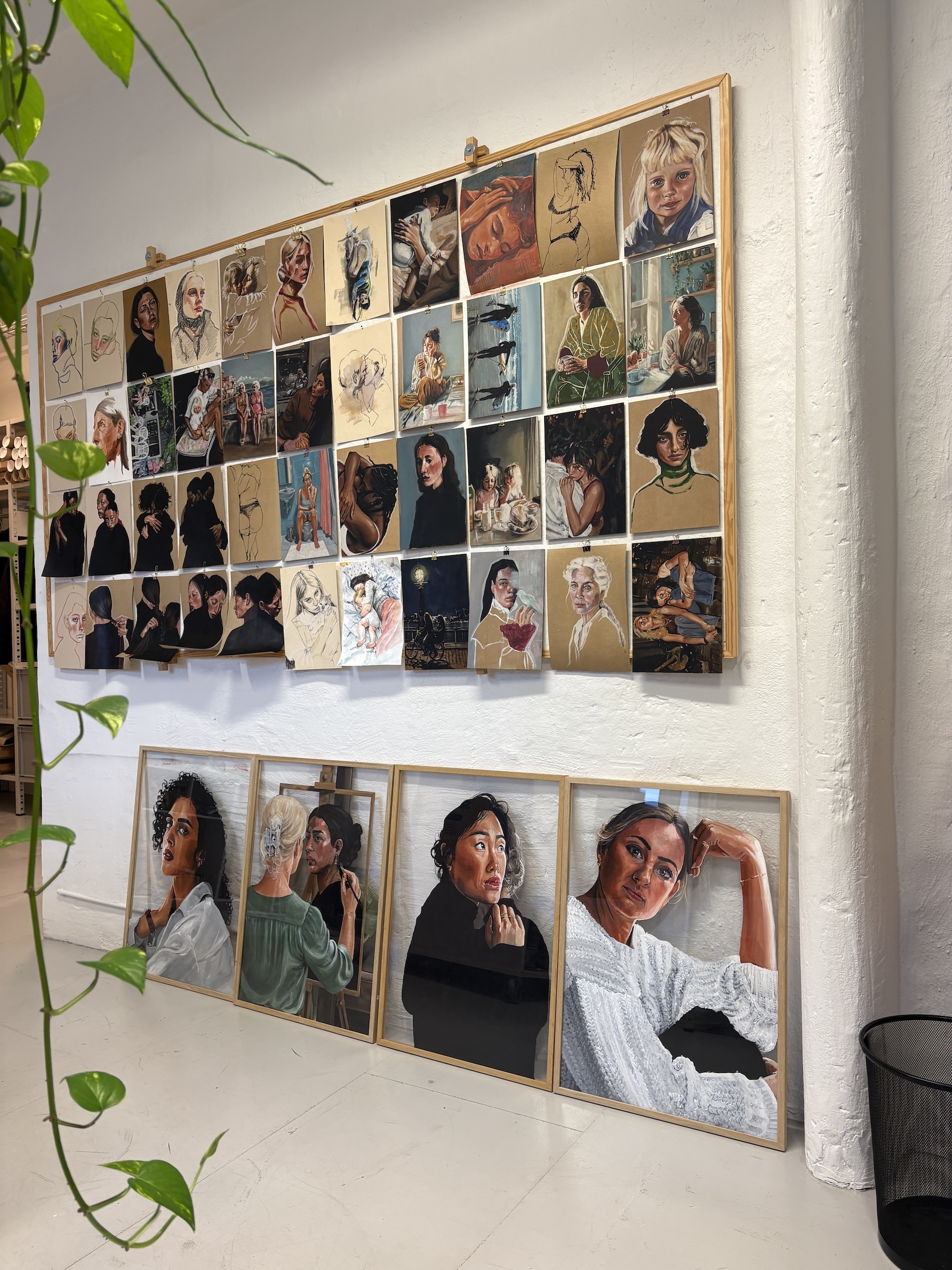
In Paul’s first letter to the Corinthians, the apostle famously wrote of seeing as if “through a glass, darkly,” contrasting it with the “face to face” revelation and clarity he believed to await us in Paradise. Yet in Mathilde Olsen’s Danish studio, transparency is not a barrier that clouds the divine, but an invitation to see further. Quite literally so, in many cases, as her signature look has become her double-sided portraits on glass.
Looking directly at a face is a deeply human act, but also a challenge. And to be looked at can be deeply uncomfortable, requiring us to become vulnerable to the gaze. We want to reveal ourselves; we want to be truly seen. But yet, at the same time, we crave a veil.
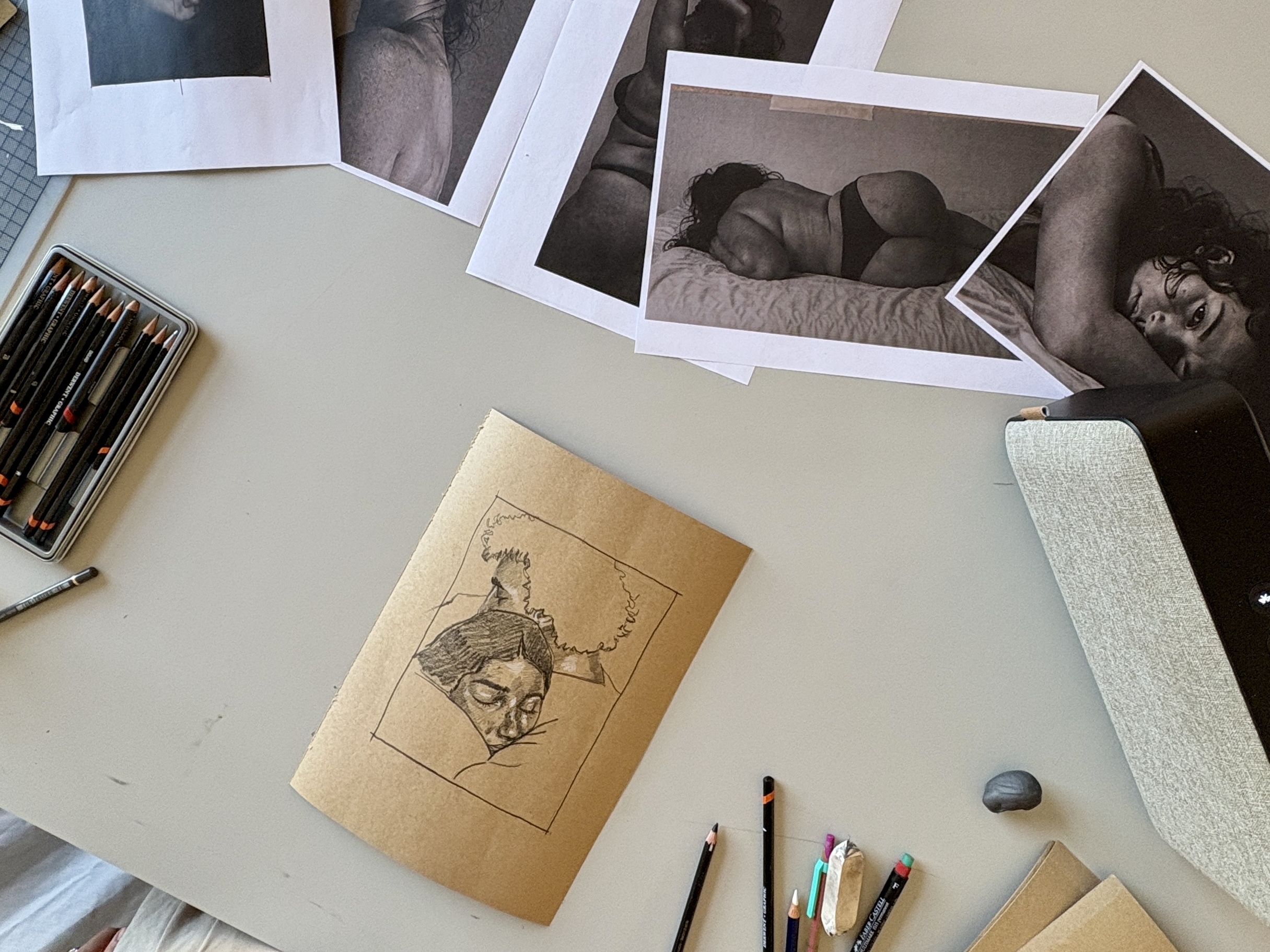
It’s a tension that Olsen herself is familiar with. She trained as an architect, graduating in 2018 and working for several years in the practice, but her professional life changed in 2023 when she won Denmark’s Best Portrait Painter. A televised competition and reality TV show, she felt deeply ambivalent about participating, fearing exposure.
“I can't be on television. I don't want that!” she says, laughing. She applied on a whim, always thinking she would drop out at the next stage, always getting one step further. She wanted to be seen, but feared also that she’d been selected because it could be “funny to see (me) fail or make a fool out of (my)self.”
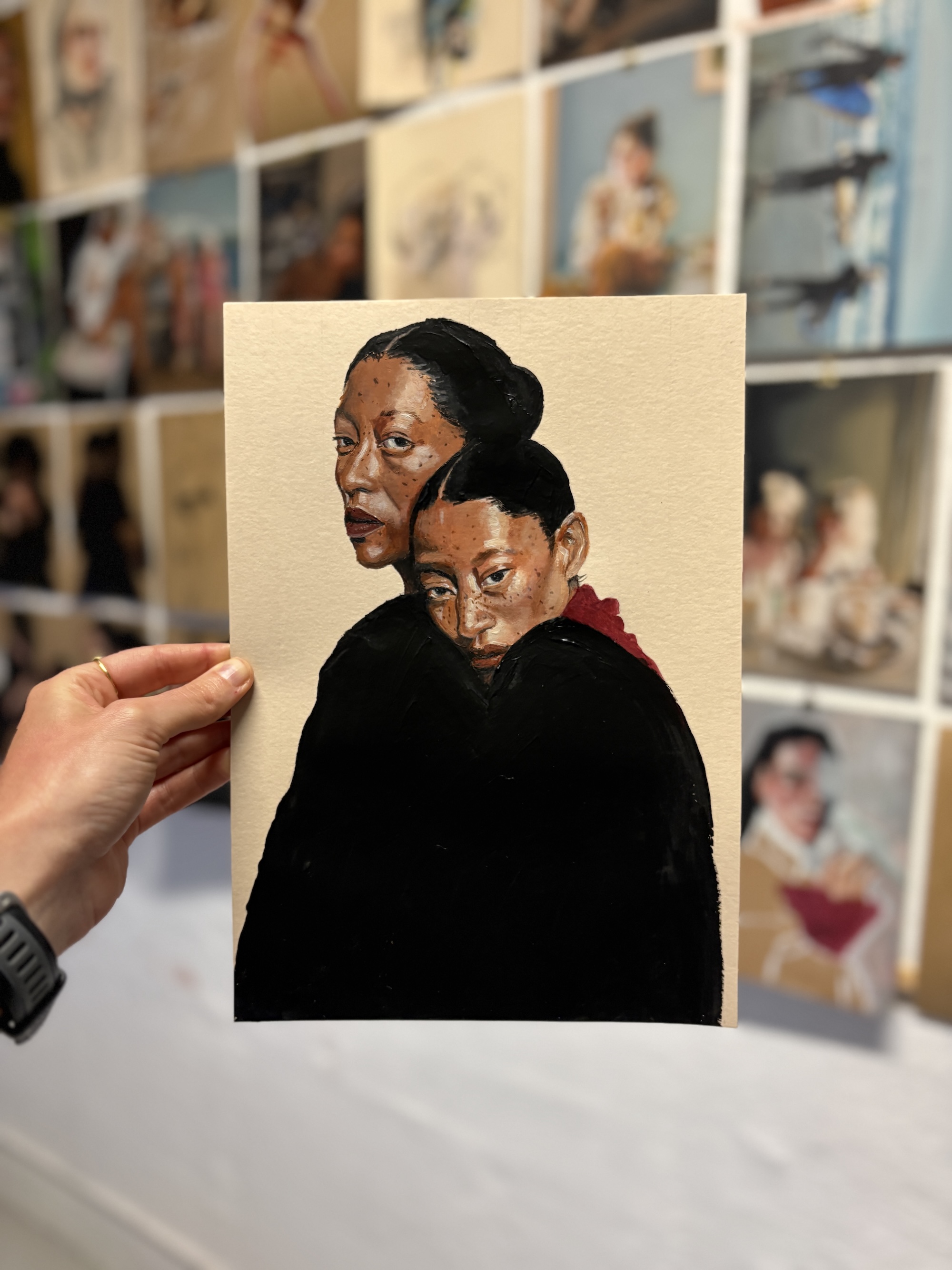
For anyone who has seen her work, it seems an astounding idea that anyone could think her work is lacking in any way. Her portraits are luminous, beautiful, kind to her subjects while retaining honesty. “I always get a lot of comments that I make people prettier than they are in real life,” she says, but what she really wants is to make “the good character shine through,” and to “make the invisible visible.”
But she struggled to turn that same compassionate eye on herself and her ambitions. It’s partly being Scandinavian: Danish people are highly aware of Janteloven, a cultural code discouraging individual exceptionalism or boasting. Olsen has also struggled with painting her own image, reluctant to see herself with as much compassion as she has for her subjects.
“I don't want to flatter myself too much. That would be embarrassing for me,” she says. It has helped to put up a barrier of time; it is less uncomfortable for her to paint portraits of herself as a child.
“It’s very difficult,” she muses. And for the TV show, “you had to apply with a self-portrait,” anathema to her instinct to hide herself away.
“You shall not believe that you amount to anything,” states the seventh law of Jante, as formulated by Danish-Norwegian author Aksel Sandemose. English-speakers may know the phenomenon as Tall-Poppy Syndrome; in Japan, there is a proverb of similar sentiment: “the nail that sticks out gets hammered down.”
“I was so afraid of just being a complete failure on TV,” says Olsen, in fear she was being set up to take a fall and exposed for arrogance in believing her work was worth anything.
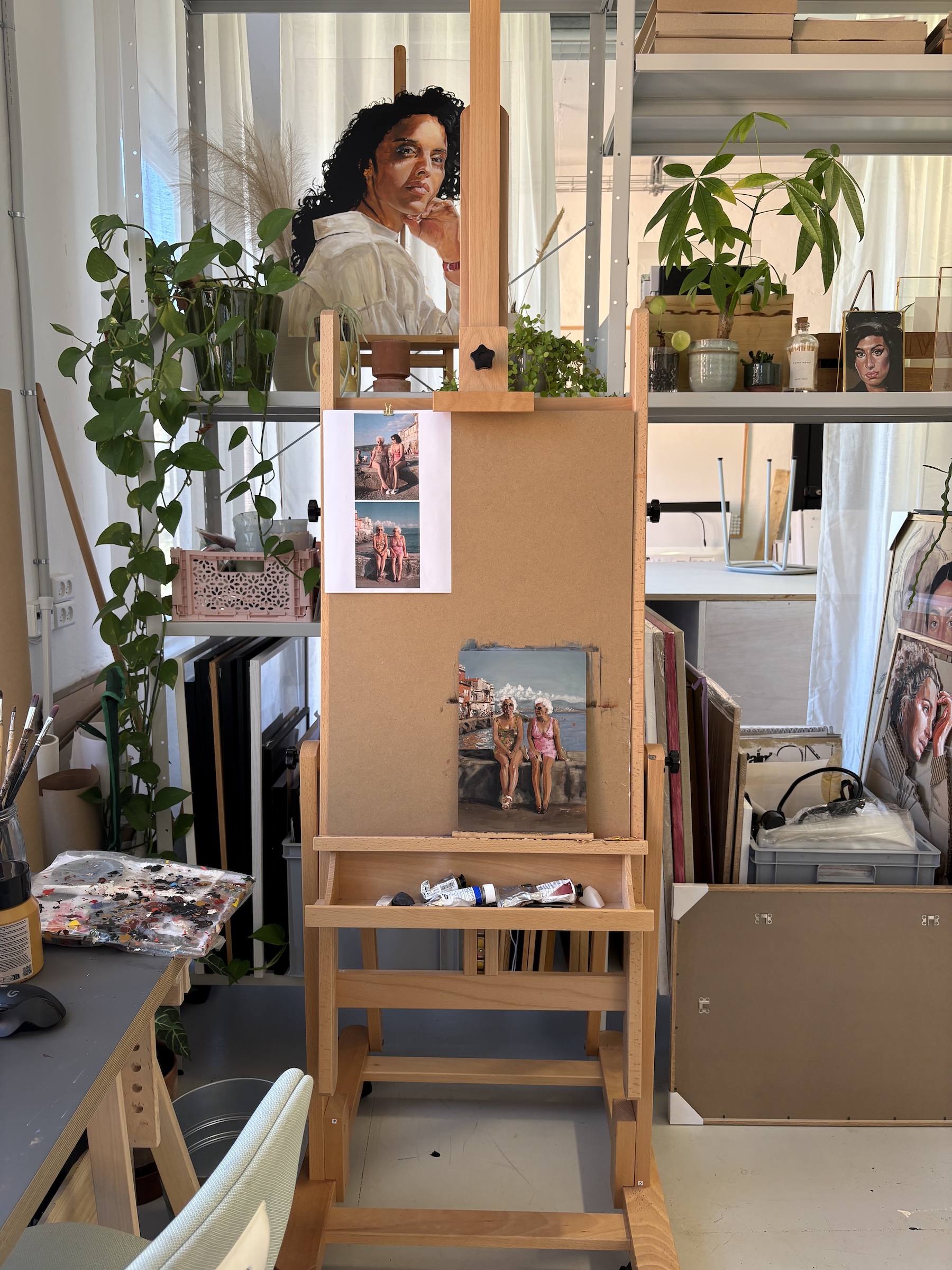
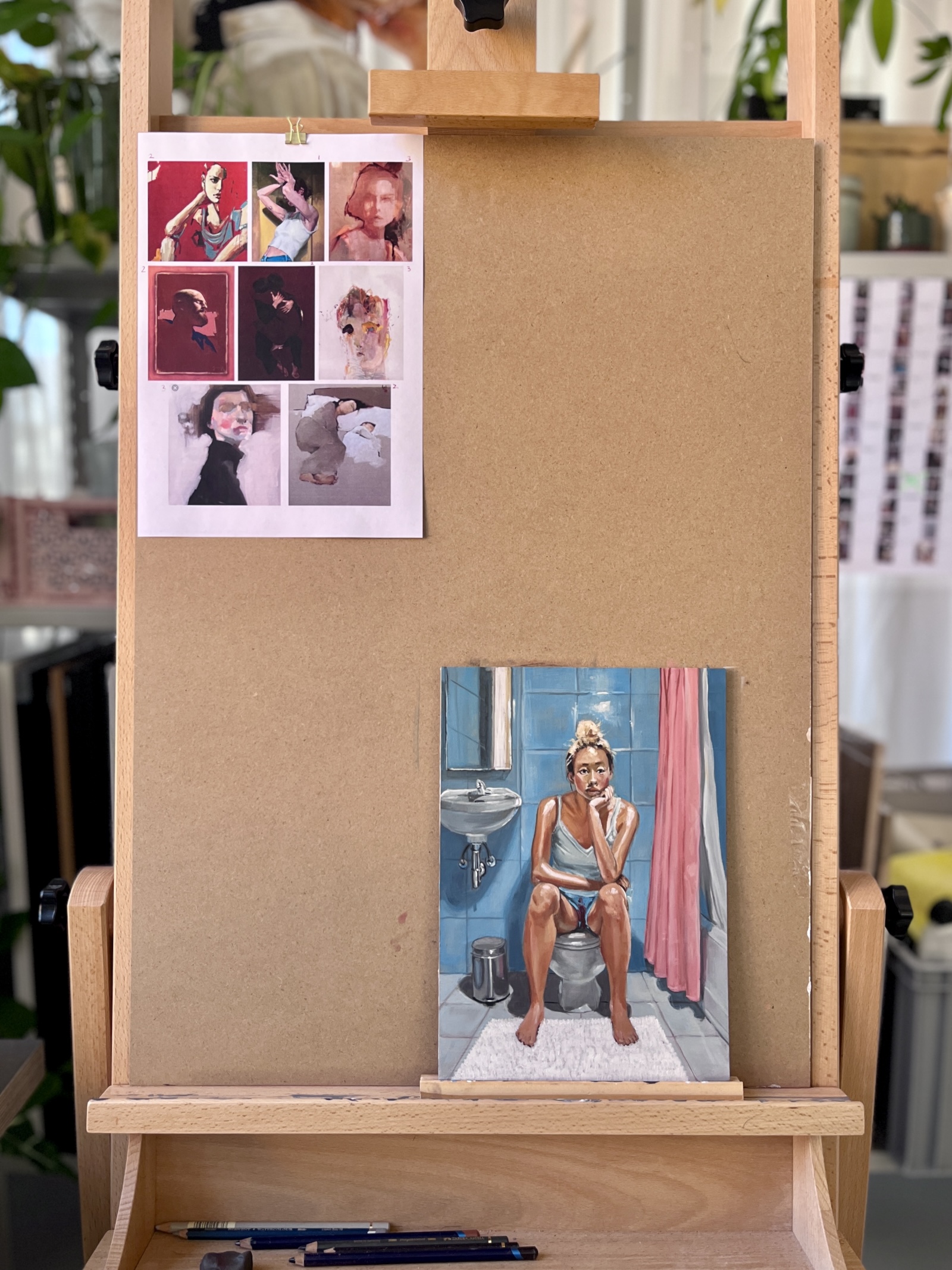
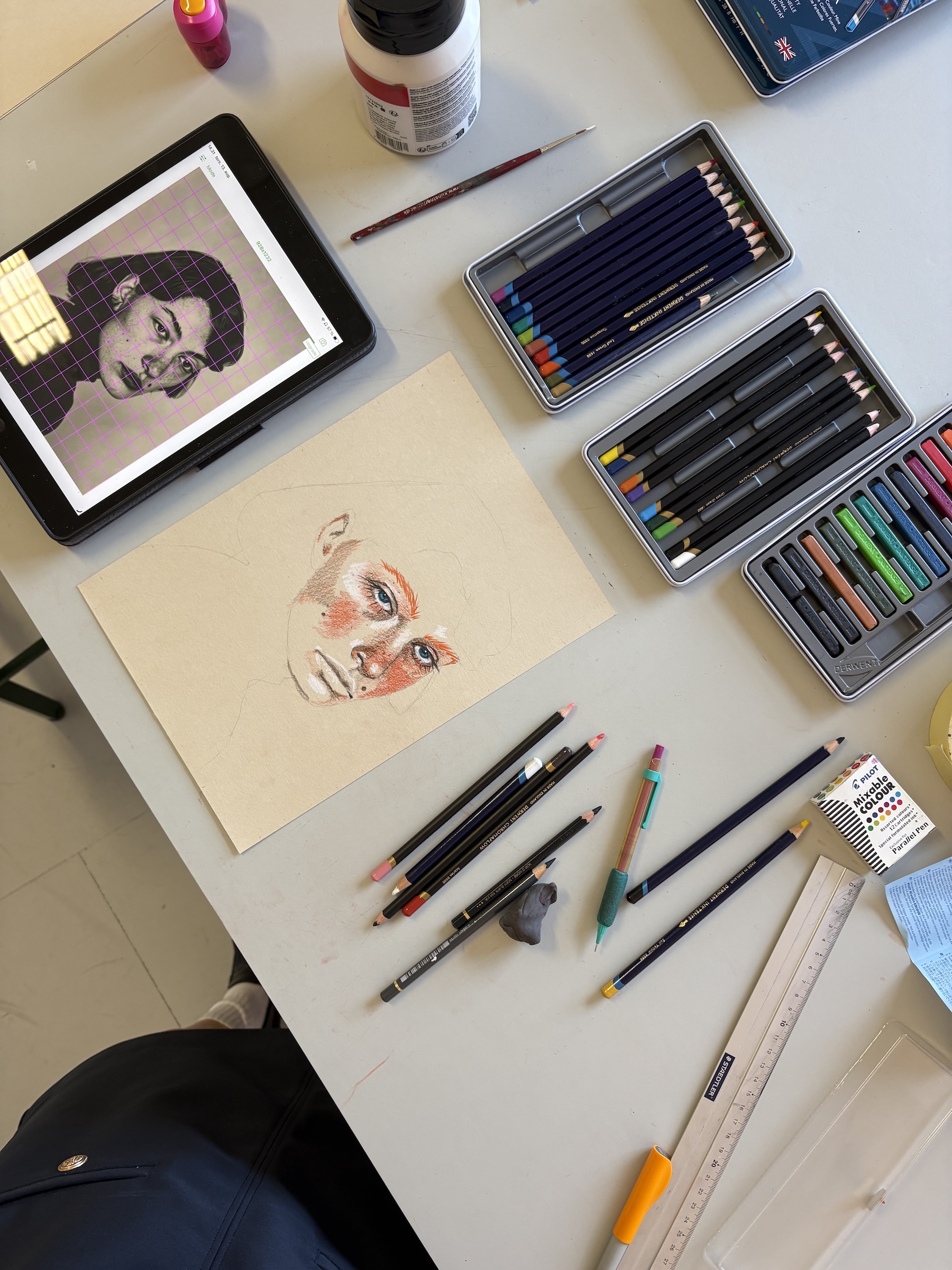
Happily, the reverse was true. The program was not the cruel exposure she feared, it really was “about the art” and her skill won her the title. She was lauded for her precise proportions, achieved through using grids, and her standout signature technique of acrylic paint on glass.
The grid work is a “technique that I learned (during) architecture study.” It was a strategy that boosted her confidence. Despite that, “people were very curious,” she remembers, recalling one person saying “you're an architect, you're not an artist.” To this day, she perceives it as an artistic weakness, “since I'm not classically trained, I don't know how the light works exactly and how to get all the proportions right.” But seeing through a grid, darkly, has turned out to be her unique strength for gaining clarity.
Portraiture, in Olsen’s hands, is an act of stepping into another person's perspective. "I think it's a blessing and a curse, to try to understand everyone," she reflects. She looks for the underlying warmth in every face, seeking to understand “why people react or act the way they do”. And yet, in every one of her double-sided pieces, we see the impossibility of ever achieving full understanding. On the one side, her subjects’ faces, but the reverse view quite literally turns its back on the notion of being seen, and indeed on the very convention of portraiture itself.
Olsen has erected barriers between herself and her subjects, to remove her own ego as much as she offers a veil to them. The grid structure, the mist of time, seeing them through the window of her transparent canvases: all are distancing devices. But rather than clouding her vision, they have enabled her to see further and more truly, beyond the surfaces they present to the real desires that lie behind them.
In trying “to see everything from everyone's perspective” she has allowed us the ultimate respect and the ultimate privacy: to be seen as we really are, and also to turn away when the glare of exposure becomes too much to bear.
Even as I write this piece, I can feel Mathilde Olsen shying away from the spotlight, uncomfortable with praise. But she must allow us the empathy she herself grants her subjects. We hold her in our gaze and see her as the highly accomplished artist that she is; not cautiously, not through a glass, darkly, but in the full beam of our admiration.