Editorials
A Map of the Shadow Self
In the minutes after the sun has set or just before it rises, the world seems to lose its dimension. Shadows disappear, and the sky takes on a blue heaviness that seems to flatten the landscape into a single, monochromatic plane. For Gabriel Isak, this blue hour can be understood as a visual synonym for almost a decade of his life.
%20Under_the_Moon.jpg)
"I remember when… the whole sky would get into that really vibrant blue," Isak reflects. "It always felt like that color was reflecting what depression felt like... everything is just very flat."
In his book, The Blue Years, Isak documents a journey through this flat, internal twilight that began in his teenage years. It is not so much a chronological record as a psychological one.
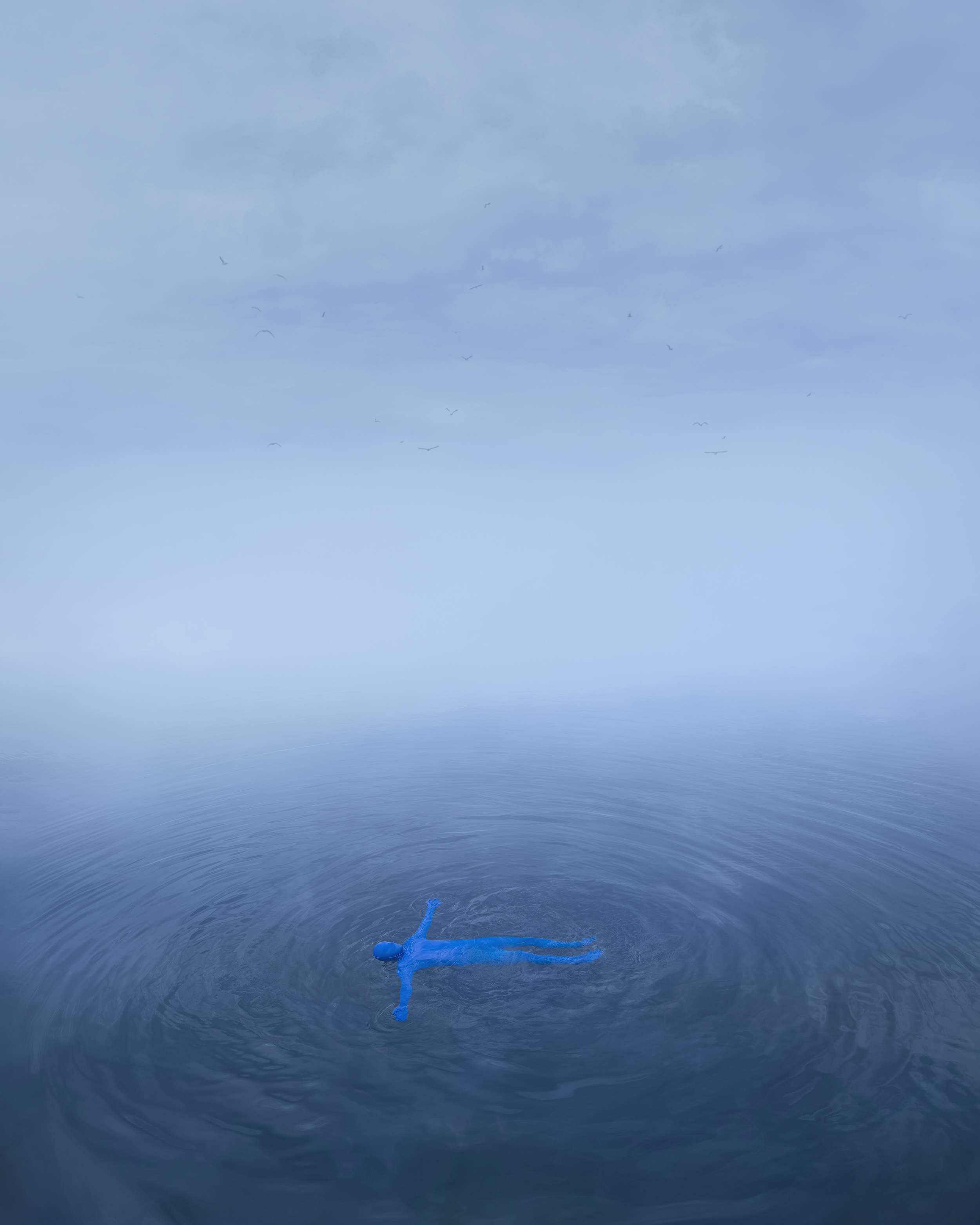
"You couldn't actually see the horizon line," he says of the experience. "You just look ahead and you don't really know where it's ending." Later on, when he started out with photography, he found much of his work mirroring this feeling. It came “very much from an unconscious place,” he remembers, but “I was realizing slowly that everything I was photographing was basically a reflection of my blue years.” In his images, the sea and sky bleed into one another, leaving the subject — and the viewer — suspended in an almost infinite, featureless space, mirroring the disorientation of a depressive episode, where the concept of "forward," “through,” or "out" feels impossible to define.

Although initially not deliberate, he began to seek out “surreal landscapes that were bleak and minimal and graphic.” He wanted, he says, “that the landscapes reflect also what I'm trying to convey in the images.”
If existentialism suggests that we are cast into a world devoid of inherent meaning, Isak’s blue world is the visual manifestation of that void. In these desolated landscapes, there are no societal structures, no clear paths, and no identities to cling to. However, Isak averts a terminal existential crisis through the very act of creation. By translating the nothingness of depression into a visual language, he finds a way to inhabit the void rather than be consumed by it.
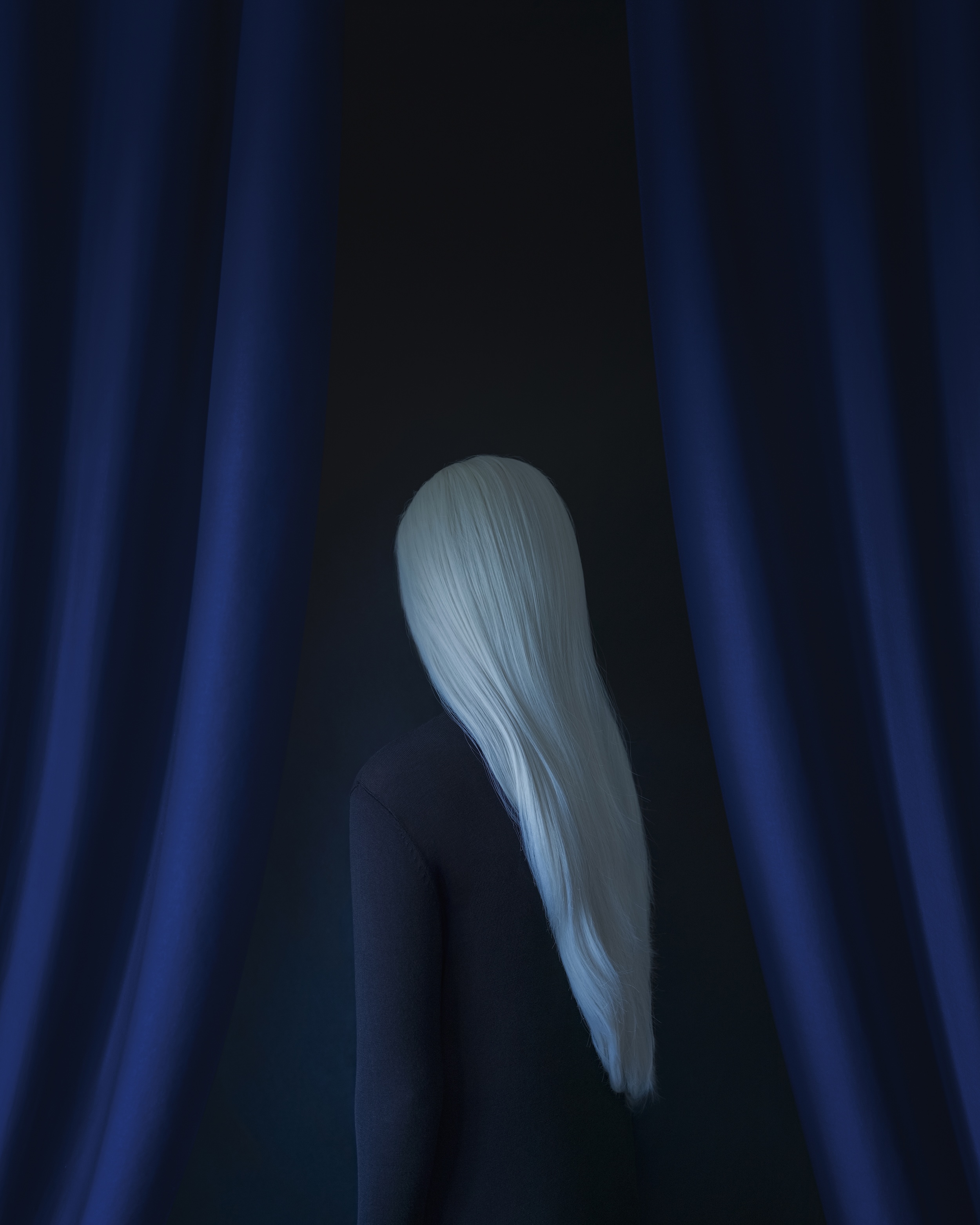
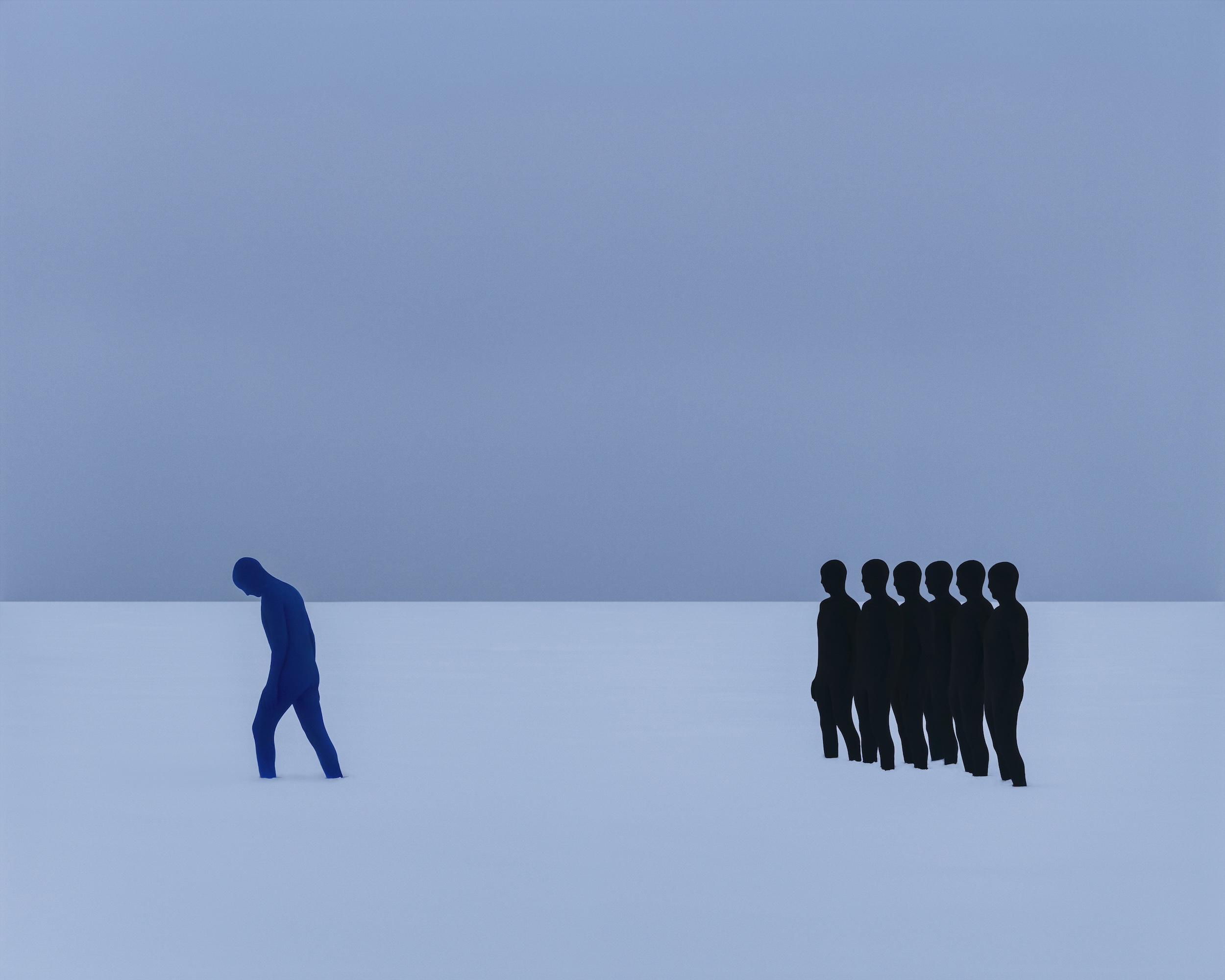
Anonymous figures, often dressed in black or white, navigate these spaces as archetypes of the Shadow and the Self. For Jung, the Shadow Self is the part of our psyche with which we are uncomfortable. By placing the shadow in direct proximity with the ego, Isak forces a meeting and a reckoning. "My work forces you to confront your emotions," he notes, much as therapy can be a painful if necessary process.
However, again like therapy, The Blue Years is ultimately a record of reclamation and ownership. It marks the moment an artist stopped being a subject of his health and became the author of his experience. "Creativity was a way of me taking the power back," Isak explains. "To create a story that was led by me, and not that I was led by." This shift transforms what sounds like a negative history into something of startling beauty. Depression can indeed feel like a flat, airless world, but in the act of depicting it, giving it form, color, and structure, he has stripped away its power to harm.
And like the artist himself, the figures in his work find meaning not in the destination, which remains hidden beyond the absent horizon, but in the singular, quiet act of being present. Their existence in a world that offers them no cues is a profound assertion of agency, representing the human capacity to generate purpose from within when the external world offers none. The existential crisis is not just averted but transformed into meaning.
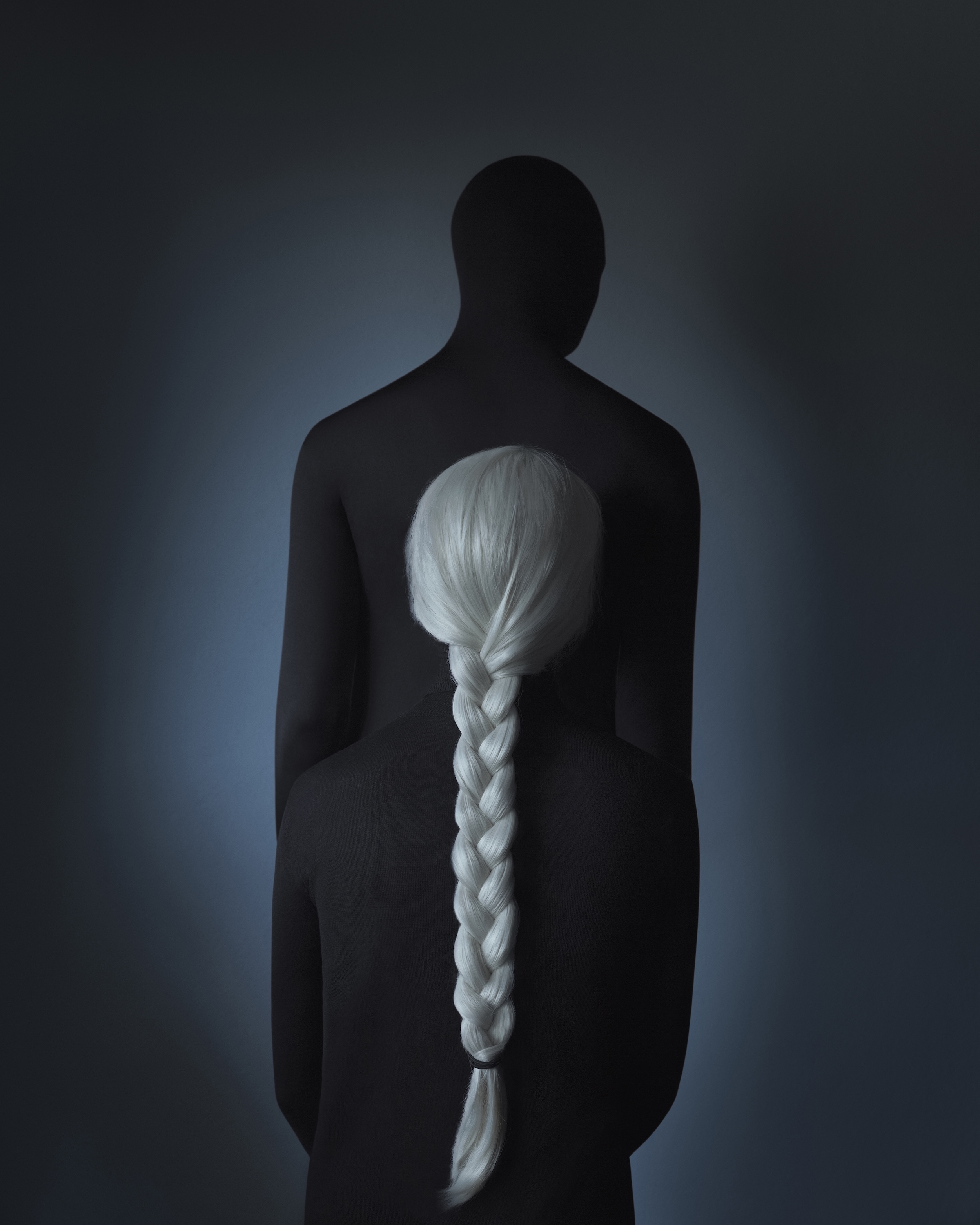
This mission of transformation extends beyond the pages of the book. The foreword to the volume is written by Steve Wallington, co-founder of The Photography Movement, an organization dedicated to using the visual arts to support mental health. Isak speaks movingly of his personal journey as part of a broader, collective effort to foster awareness and empathy for mental health issues. The book can also be seen as an invitation to the reader to step into the frame and join him. Because Isak strips his subjects of identity — hiding faces, removing features — his images become vessels.
"Stripping away all identity from the work makes it easy for people to put themselves in the photographs," Isak says. He views his work as a particular accomplishment when it resonates with the experiences of others. Sometimes, “they leave me a very long message about how it reflects what they have gone through,” he says, which affirms his instinct that his photographs are not just beautiful but a powerful force for good.
Depression can be a very isolating experience, as can being an artist. “You start feeling very ostracized from the rest,” he confirms. By finding the universality of human experience in his images, Isak finds a point of connection in a shared solitude. It is no longer an impossible weight to be carried; it is a landscape to be explored together. You can walk through the shadow, swim through the sea, and emerge on the other side, reborn.